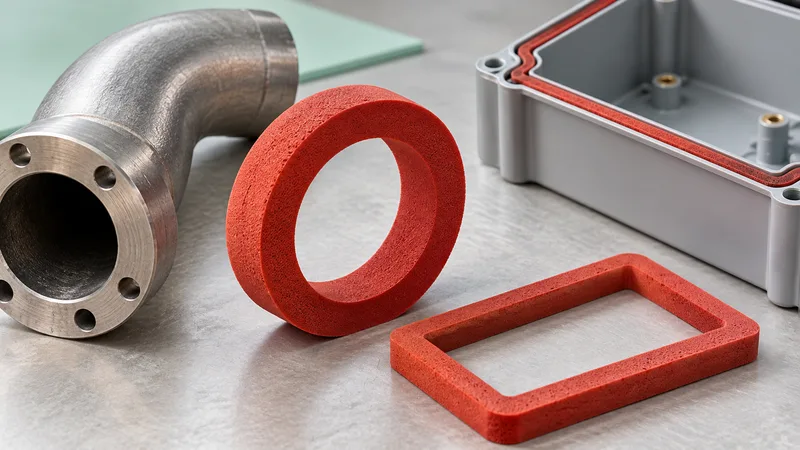
A Silicone Foam industrial/electronics brief should tell the reviewer where the part sits, what condition it must address and which decision is needed next. A piping interface and an installed equipment part can both enter the material scope, but they do not share one automatic approval. The record should follow the actual assembly and its evidence requirements.
The Silicone Foam route follows the supplied Silicone Foam material information for high-temperature piping and electronic-equipment insulation/sealing. Grade selection is directed by temperature and medium needs. This guide organizes that request without inventing a temperature range, a flame class or a completed industrial customer project.
Give the interface a controlled identity
Name the component, assembly location and drawing revision. State whether the function is sealing, insulation-related separation or another defined interface task. The reviewer should not infer that function from the shape. If the project has several Silicone Foam parts, keep each interface identifiable while using a common programme reference for coordination.
Identify the mating parts and the features that locate the foam. Include a section when a step, recess or local clearance matters. Record provisional dimensions and prototype departures. A useful early sample can still have limits, but the record must explain them before another team treats the setup as final.
State whether the request concerns raw material, a converted part or an assembled evaluation. These scopes can have different owners. The supplier may provide a grade record and a cut sample while the equipment team owns the installed requirement. Preserve that responsibility boundary instead of collapsing it into one broad material-approved label.
- Component and interface identity.
- Function, location and drawing revision.
- Mating parts and controlled section.
- Provisional geometry and known departures.
- Requested material, conversion or assembled decision.
Document temperature as a requirement with an owner
Identify the condition the engineer wants addressed and where it applies. State the relevant operating, assembly, cleaning or service event as appropriate to the project. The general phrase high temperature does not name a grade or prove an outcome. The brief needs a requirement that can be connected to applicable evidence.
Record who defines and approves the condition. The piping or equipment owner may have information that the material buyer does not. Ask for that input rather than inventing a typical number. The current material information does not establish a universal numerical temperature range for Silicone Foam.
Separate required outcomes from available records. A supplier response should say which grade evidence is provided and which question remains open. A planned evaluation is not a completed result. Preserve the distinction so a project requirement does not become an unsupported supplier promise in the quote.
If several locations or events need review, list them individually. A condition applicable near one interface cannot automatically describe every part inside an enclosure or along a pipe assembly. Keep the evidence attached to its location and configuration. This makes the brief usable when the project changes.
| Brief field | Record | Acceptance boundary |
|---|---|---|
| Interface | Drawing, mating parts, function and revision | Only the identified assembly is reviewed |
| Exposure | Temperature event/location and actual medium | Requirement is not a demonstrated result |
| Construction | Grade, thickness, form, backing and joins | Added materials need applicable evidence |
| Sample | Fixture, method, departures and owner | Fit does not prove every exposure outcome |
Document the medium and contact context
Name the actual medium, substance or contamination relevant to the interface. Explain how and when contact occurs. A cleaning event, operating exposure and incidental contact can be different project conditions. The brief should preserve these distinctions without replacing them with a generic compatibility adjective.
Ask whether the proposed grade record addresses the stated condition. If another test or review is needed, identify its owner and expected evidence. Geometry work can proceed while a medium requirement remains open, provided the scope is explicit. A fit sample cannot close that question on its own.
Include any added material that enters the contact path. Backing, joints or layers can create a construction question beyond the foam specimen. The supplier and assembly owner need to know what the complete proposal contains. Do not assume the whole construction inherits a result for one material surface.
Record substitutions as changes to the brief. A different medium, cleaning process or mating material may require another review even when the foam shape stays the same. Keep the previous evidence identifiable and ask the owner which conditions need re-evaluation. Similar appearance is not evidence of equivalent exposure.
Define form, construction and installation responsibility
Provide shape, thickness, openings, corners and joints on the drawing. State which features arrive finished and which work remains during assembly. The Silicone sheet, strip and gasket guide helps define this scope. The request should not assume every conversion method or backed construction is supplied.
Show the installation order and access constraints. Record how the foam is positioned and inspected before other parts limit access. If a prototype uses a temporary support or a different sequence, name that departure. A sample observation should not silently approve a production method the project has not defined.
List added materials and their purpose. Ask whether a backing serves only handling or forms part of the functional interface. Identify the owner of its availability and exposure evidence. A useful construction proposal says what each element is expected to do instead of presenting a generic adhesive gasket as universally suitable.
Keep volume and commercial scope beside the construction identity. Tooling, processing, MOQ and delivery remain questions for the actual request. The material record does not establish universal production conditions. Do not add default promises to make the project brief look more complete.
Request material records without overextending them
The provisional entries are 150–350 kg/m³ and Shore C 10–40, both [需确认]. Ask for the proposed grade, method, specimen thickness and tolerance. The Silicone density and hardness guide explains their interpretation. These material fields do not prove temperature class, medium compatibility or complete-system sealing.
Identify the record for each level of the project. Raw material, converted geometry and the installed interface have different scopes. Ask what each supplied document supports and which assembly requirement still needs evidence. A technical sheet should not be stretched into a claim about every piping or electronics outcome.
The ASTM International catalogue provides method references, and the NIST measurement resources support measurement context. These authority links are not Green Foams test reports or certifications. The applicable record still needs to be identified for the proposed grade.
- Request the proposed grade and technical record.
- Preserve method, specimen and condition details.
- Separate geometry from exposure evidence.
- List unsupported requirements as open actions.
- Assign the appropriate acceptance owner.
Choose a representative sample fixture
Use the mating surfaces that establish the intended interface where possible. Identify substitute parts when the final assembly is unavailable. A substitute can support a limited question, but its limits belong in the record. The reviewer should know whether the sample demonstrates geometry, installation or an agreed exposure condition.
Name the observation method for each task. A drawing comparison, installation check and performance evaluation are different activities. Record the result with the sample identity and setup. Avoid a broad statement such as sealing passed if the actual review only observed contact in a prototype fixture.
If the project requires temperature, medium, flame, electrical or system-rating evidence, list it separately. The current application scope does not provide those approvals. A sample can be useful while those questions remain open, but the release record must say what is accepted and what still needs another method or record.
Release the interface and manage revisions
Approval should name the drawing, grade or open grade question, form and construction. State which observations are accepted and which evidence remains pending. A bounded decision lets the project move to its next review without claiming that every piping or equipment requirement has been proved.
Return to the Silicone temperature/medium selection guide when an alternative changes the interface conditions or material route. A different thickness, join, backing or exposure can require another sample or record. Keep the previous evidence and explain which decision depended on it.
At purchasing handoff, preserve the controlled drawing and supplier assumptions. Ask the response to identify departures from the request. The assembly and evidence owners should review them before they become substitutions. This prevents an unreviewed construction from inheriting the wording of an earlier approval.
The useful final brief is therefore specific about the interface, temperature, medium, construction and next decision. It keeps material evidence and assembled observations related but distinct. Another reviewer can identify what was checked and what remains open without relying on a universal silicone performance claim.
Ask the supplier to answer the controlled fields in the same order as the request. The response should identify the grade, format, construction, drawing revision and open evidence questions. A material name without that context cannot be matched reliably to the reviewed interface.
When the next sample arrives, preserve the earlier record and add the reason for the change. The receiving and assembly teams should know which version to compare with the drawing. A precise handoff lets the project use useful observations while keeping new construction or exposure questions open until the relevant owner reviews them.
Keep a named contact for the drawing and a named contact for evidence approval, so a supplier question reaches the person who can resolve it.