Skip to content

Packaging & Logistics · application review

Foam packaging inserts and returnable carriers.

Compare EPE, EPP and EVA routes around the product, enclosure and handling workflow.

Discuss your component
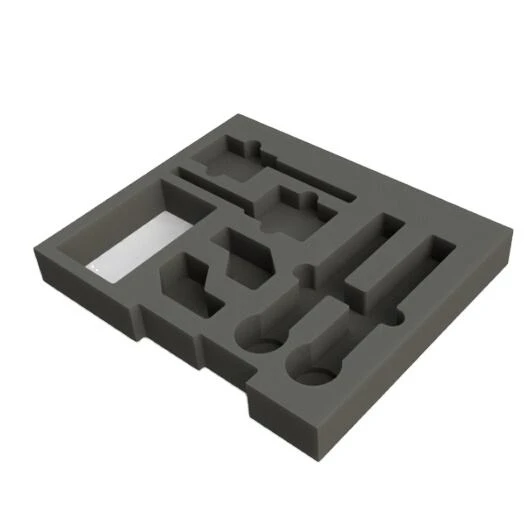
Custom cut foam packaging insert with shaped compartments
Customer insert reference; packed-product protection requires a project-specific system review.

01 / Start with the task

Inserts and returnable handling units solve different jobs.

A protective insert and a returnable carrier both organize product contact. The enclosure, loading sequence and handling context determine which routes need review.

01

Product transport inserts

Use an insert route when the foam must support the product inside a defined enclosure. EPE brings sheet/roll and shaped-liner concepts; EVA adds hardness, colour and thickness choices. The pocket, support face and removal access matter before a material can be shortlisted.

Which product surfaces carry support, and which remain clear?

02

Returnable boxes, pallets and carriers

Consider an EPP molded concept when the project is the handling unit itself: a returnable box, tray or protective carrier. Its loading and locating features become part of that concept, rather than only an insert inside another enclosure. Reuse requirements need their own inspection and performance evidence.

How is the part loaded, located, removed and inspected between uses?

02 / Compare on common inputs

Format choices change packing and removal.

Use the same product envelope and approved contact zones for every proposal. A sheet/roll supply task, a shaped insert and a molded carrier are not interchangeable quotations. Check where conversion happens and how the operator loads and removes the product before comparing the complete-package samples.

Qualitative application routes; grade-specific supply and performance require confirmation.
Packing decision Material direction Why consider it / what changes the route
Sheet/roll liner or shaped insert EPE EPE is a sheet/roll and shaped-liner direction for electronics and precision instruments. Decide whether the proposal is stock material for conversion or a shaped insert: these are different supply tasks and must show how the product is supported and removed. Confirm the actual conversion scope.
Insert with hardness, colour or thickness choices EVA EVA is an insert direction when those choices are part of the brief. Compare a proposed EVA construction with the same product/enclosure and operator access as the EPE option; the family names do not establish a stiffness or protection ranking.
Returnable handling unit EPP EPP is a molded-box, tray and protective-part direction. Consider it when a defined handling-unit shape is needed. Changes to loading access or locating features belong in the molded concept and tooling discussion; confirm the manufacturing scope and between-use inspection requirements.

03 / Prepare the review

Describe the pack, not only the foam cut-out.

The packaging enclosure, product orientation and operator sequence belong in the request. A useful sample includes enough of the system to answer the stated decision.

  • Product drawing, approved support faces, sensitive surfaces and accessories.
  • Carton, case, box or carrier dimensions and closure sequence.
  • Shipping/handling conditions and any defined validation requirement.
  • Packing, removal, reuse inspection and sample approval ownership.

04 / Resource guides

Move from a shortlist to a reviewable sample.

Packaging & Logistics material questions

How should EPE, EPP and EVA be compared for packaging?

Compare them within the intended packaging job. EPE/EVA can enter insert geometry discussions; EPP enters returnable-box, pallet and protective-part discussions. The complete product/enclosure context determines the review.

Does a fitted insert prove transport protection?

No. Fit is one observation. A defined packaging evaluation needs the intended product, enclosure, configuration and agreed test or handling conditions.

What starts a packaging sample request?

Provide the product envelope, approved support zones, sensitive surfaces, enclosure, loading/removal sequence and proposed acceptance checks.

Bring the packed-product brief.

Share the product envelope, support zones, enclosure, handling route, expected volume and complete-package sample requirements.

We use only necessary browser storage to remember privacy preferences and support core site functions.