Sealing & Rubber Foam
Neoprene Foam (CR)
Sealing, dust protection and cushioning for cabinets, doors, windows and equipment.
- cell structure and hardness selection
- environment and media considerations
- gasket and die-cut formats
Send your drawing, dimensions or application.

01 / Product overview
What is Neoprene Foam (CR)?
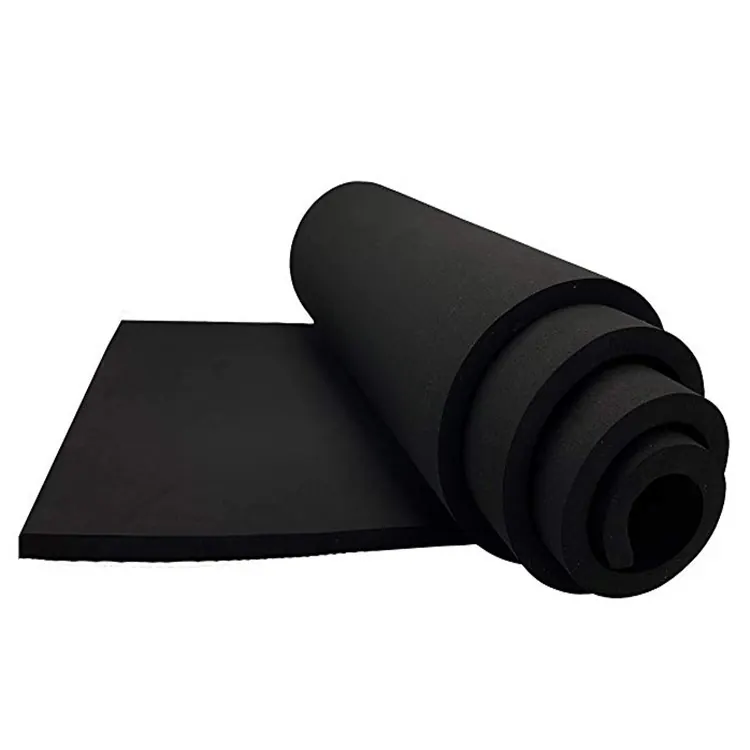
Neoprene foam, also called CR foam, is a chloroprene rubber foam. The supplied series is discussed for door and window joints, cabinets and dust-sealing pads.
For a CR foam seal, first separate the material record from the installed interface. An open-cell or closed-cell description is a grade characteristic; it does not show how a door, cabinet cover or dust pad will be located and compressed.
Discuss your application02 / Benefits
Key selection considerations
Cell structure and exposure
Keep the offered open-cell or closed-cell construction with the grade record. Identify the actual contact medium and the location of exposure instead of treating every CR foam as the same sealing construction.
Joint movement
A removable cabinet cover and an opening door present different installation and repeat-access questions. Show the mating surfaces, closing direction and joints in the sealing path.
Gasket outline versus stock
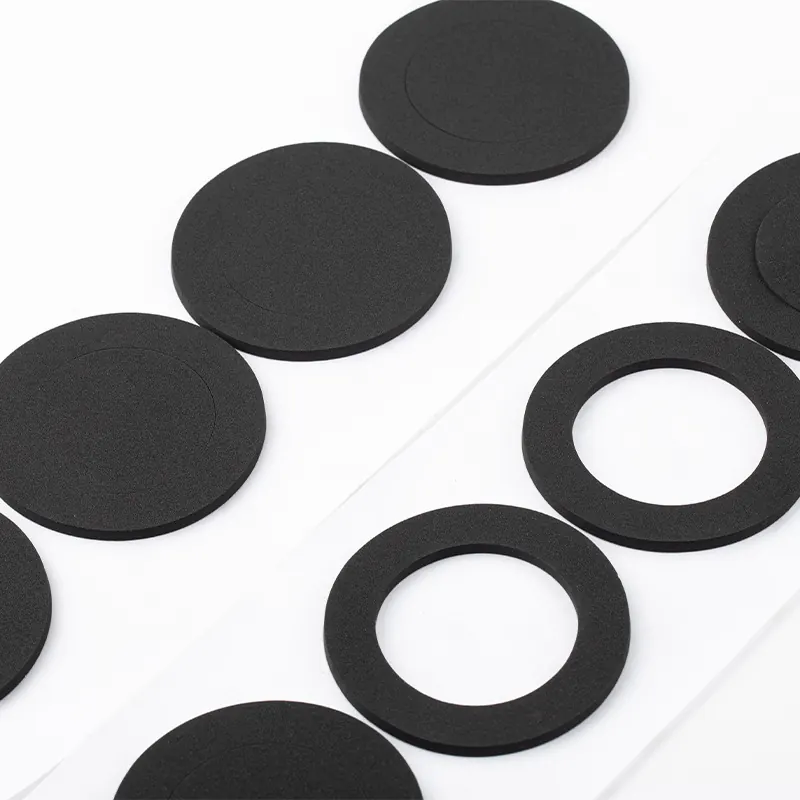
Ordering flat stock leaves cutting and joins to a later operation. Ordering a shaped gasket requires the finished outline, holes and orientation so the supplied-part boundary is clear.
03 / Technical specifications
Properties & specifications
Compare the source range with your application requirements.
Source: company-supplied preliminary series information. These values have not been verified against approved grade-specific data sheets, test methods or tolerances. They are not guaranteed supply specifications or purchase acceptance limits.
| Property | Range / Options |
|---|---|
| Density | 80–250 kg/m³ |
| Hardness | 10–40 Shore C |
| Cell Structure | open-cell or closed-cell |
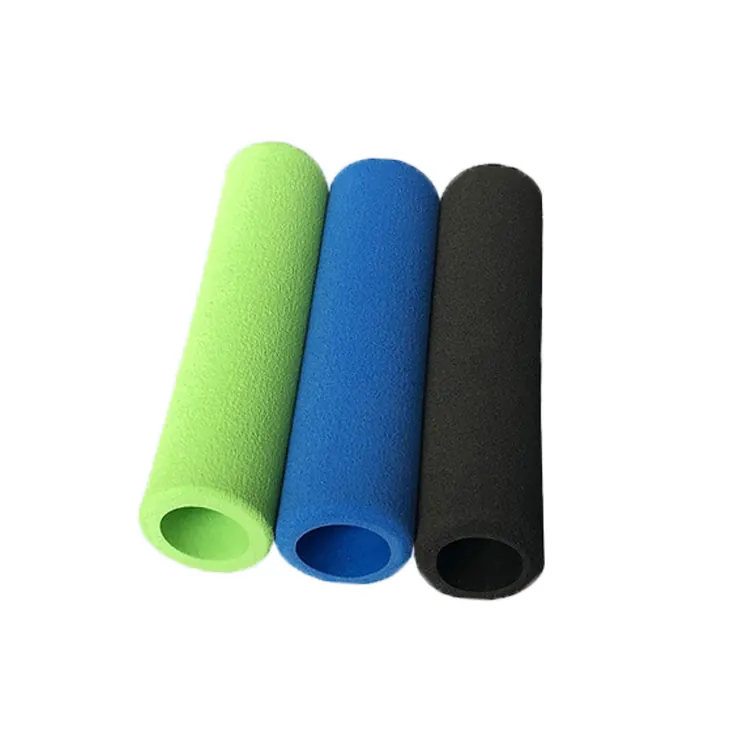
| Formats | sheet, strip, gasket, custom die-cut profile |
Ranges vary by grade. Confirm specifications and test methods for your application.
Ask about specifications04 / Formats & construction options
Formats & construction options
These are constructions to discuss, not a stocked range. The offered grade, conversion scope and dimensions are agreed for each enquiry.
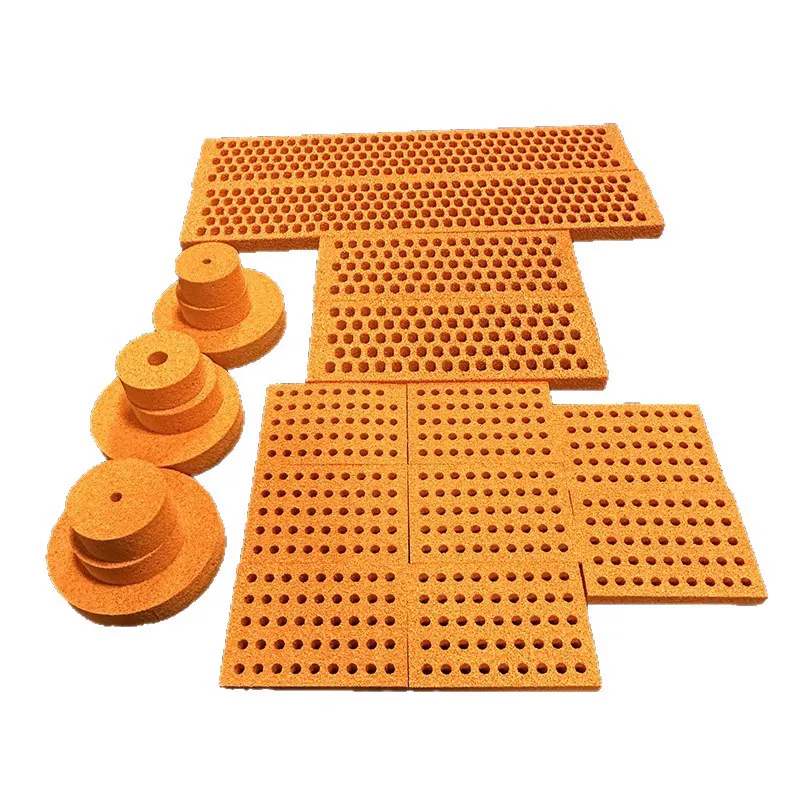
Sheets
A sheet enquiry identifies stock width, length, thickness and the proposed cell structure. Include the intended cutting responsibility if the stock will become seals or pads.
Strips
Describe the sealing path and where strip ends or corners meet. Width and thickness alone do not explain the continuity of a cabinet or frame seal.
Gaskets
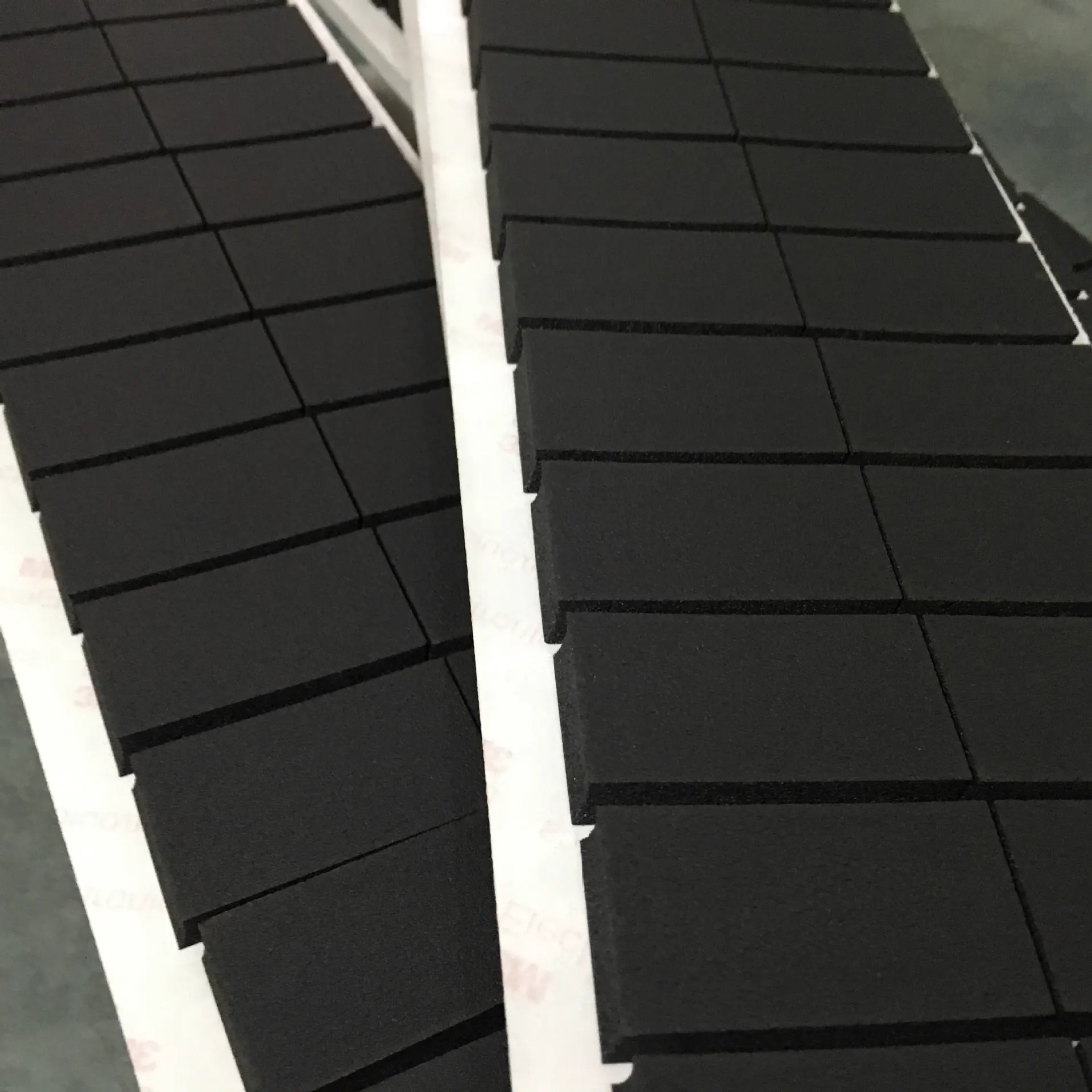
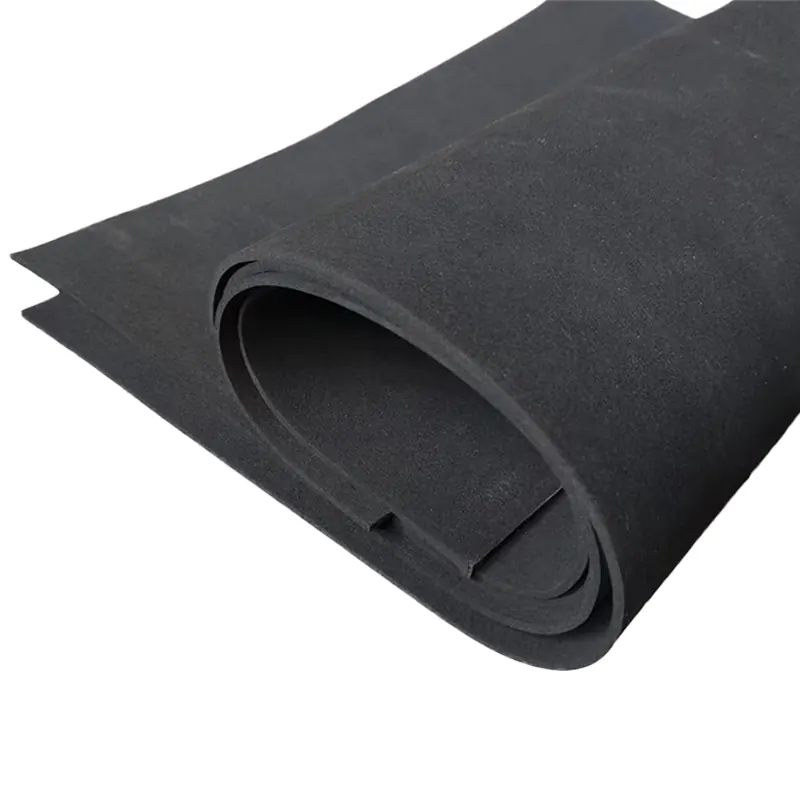
Provide the cut outline, hole positions and counterpart references. The same outline can be installed differently if the cover, fasteners or locating features change.
Dust pads
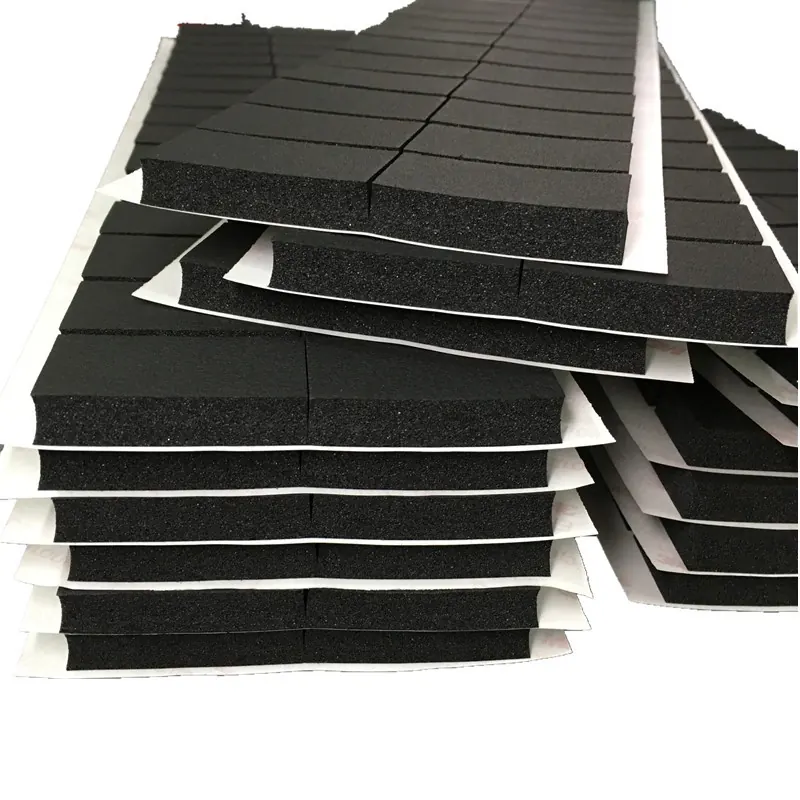
Show which face contacts the equipment and which openings must remain clear. Attachment and service access belong in the pad definition, not only in a material name.
05 / Applications
Applications of Neoprene Foam (CR)
Match the part geometry and sample question to its intended task.
- 01
Doors and windows
Mark the opening direction and the parts of the joint that change gap as it closes. A strip should be reviewed in that interface rather than compared only as an uncompressed specimen.
- 02
Equipment cabinets
Identify the removable cover, fastening arrangement and sealing path around local features. Service access may require a different sample configuration from a permanently closed interface.
- 03
Dust protection
Locate the dust barrier and the gaps or openings it must address. A fitted pad is not evidence of a rated enclosure or a completed ingress test.
- 04
Industrial gaskets
Separate the material proposal from the fluid, temperature and compression conditions at the joint. Grade suitability and assembled sealing acceptance require their own evidence.
06 / Quality & project review
Sample checks for Neoprene Foam (CR)
Agree the drawing, applicable material data and sample requirements for your project.
Seal path and joins
Inspect the outline, strip ends and corner details against the identified cover or frame; include the orientation used during installation.
CR grade construction
Tie the sample to its cell structure, thickness, density and Shore C record. Do not compare an unspecified cellular grade with a different construction by hardness alone.
Closing and access trial
Document the cover or opening part used in the fit review and whether service removal was included. Keep dust or sealing performance outside a fit-only acceptance.
Attachment definition
Keep any agreed backing, counterpart preparation and join arrangement with the order. These are part of the construction to be repeated.

08 / Neoprene Foam (CR) FAQs
Neoprene Foam (CR) FAQs
Questions to settle before sampling or production.
What is the minimum order for neoprene sheets or gaskets?
Provide sheet dimensions and count, strip width and total length, or a gasket drawing and piece quantity. Our team will confirm the minimum order for the selected grade and cut format.
What conditions should I specify for a neoprene seal?
Share the sealing gap, compression, temperature range and exposure to weather or fluids. Grade suitability and any required performance tests should be confirmed for those conditions.
How do I choose the cell structure and hardness?
State whether the part is intended to seal, cushion or allow airflow, and provide the compression requirements. Confirm the cell structure, density, hardness and thickness using a grade specification or reference sample.
How should I specify a die-cut neoprene gasket?
Send the outline, hole locations, thickness and dimensional tolerances, plus any adhesive requirement. Review fit and compression on a sample before approving the production specification.
09 / Request a quote
Request a quote for Neoprene Foam (CR)
Send the CR foam seal outline with the door, cover or dust-barrier interface. Identify the cell structure if known, and separate installation fit from the performance evidence you need.
- Gasket or strip drawing with joins and holes
- Mating surfaces, closing movement and service access
- Medium, exposure and proposed cell structure
- Quantity, backing needs and sample acceptance scope
Tell us about your project
Prepare an email with your project details, then attach drawings and send it from your email app.