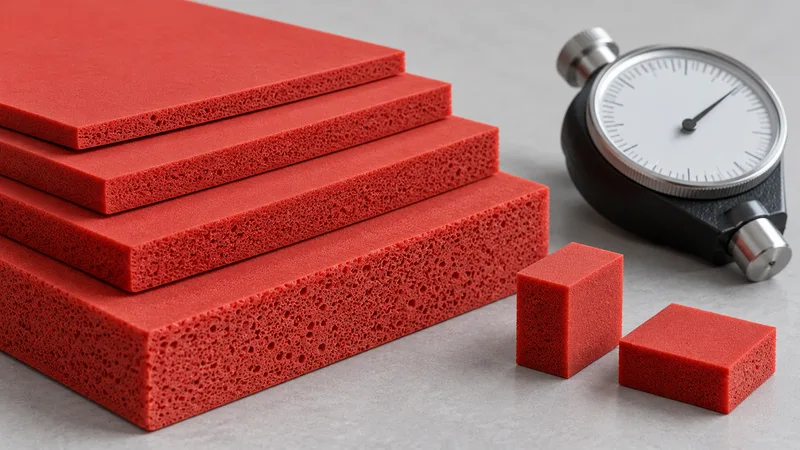
Reading Silicone Foam density and hardness requires a grade and method context. A pair of numbers cannot describe every converted interface or temperature condition. The project must distinguish material measurement from installed geometry and exposure evidence. Keeping those fields separate makes a specification useful without turning a provisional range into a performance promise.
The Silicone Foam material route follows the supplied Silicone Foam material information. Its density 150–350 kg/m³ and Shore C 10–40 entries are [需确认]. The same source describes high-temperature piping and electronic-equipment insulation/sealing, with selection by temperature and medium. No numerical temperature range or universal class is confirmed.
Ask which grade the record describes
Begin with the proposed grade reference and technical-record identity. A family-level range does not name a stocked grade or establish how each value maps to a finished part. Ask the supplier what material is proposed and which record applies to it. Preserve missing information as an open field.
Identify whether the record concerns raw material, a converted part or an assembled interface. Each has a different scope. A raw foam value can support a grade discussion while a converted gasket adds geometry and processing. Mating surfaces and the installation sequence add another level of context to the final component.
Keep the drawing and record revisions linked. If the proposed grade changes, identify which technical sheet replaces the earlier one. If the drawing changes, ask whether the existing material evidence still addresses the intended condition. A useful specification should show which records supported the decision rather than collect unreferenced values.
- Material family and proposed grade.
- Technical-record reference and revision.
- Raw-material, converted-part or assembly scope.
- Method and specimen context.
- Open fields and evidence owner.
Read density without using it as an exposure class
Density describes a mass-to-volume relationship under the relevant measurement method. Ask what specimen and grade the value represents and which tolerance or variability record is supplied. The provisional material record range does not establish that every point is an available grade. Do not interpolate a material option from the range alone.
A density value does not specify temperature capability or medium compatibility. Those questions need their own applicable evidence. It also does not determine the installed contact result for a complex interface. Thickness, shape, mating surfaces and assembly conditions remain separate project inputs.
Keep density in a dedicated specification field. A purchasing request can ask for the proposed value and method without declaring the full component qualified. If another proposal changes density together with geometry or backing, record all changes. The observed difference cannot be assigned to one field while other variables remain hidden.
The Silicone temperature/medium selection guide explains those independent conditions. Use it when a material record seems to answer a requirement that it does not actually address. A clearer evidence map is preferable to a larger density table built from assumptions.
| Field | Question to ask | Cannot establish alone |
|---|---|---|
| Density | Which grade, method and specimen does the value describe? | Temperature rating or sealing result |
| Shore C | Which method, thickness and conditioning apply? | Universal installed compression response |
| Thickness/geometry | Which controlled drawing features are reviewed? | Grade-specific compatibility |
| Exposure evidence | Which temperature and medium condition is addressed? | Unrelated interface or complete-system outcome |
Read Shore C with its method and specimen
Shore C is a hardness record under an applicable measurement method. Ask for specimen thickness and other conditions that affect the interpretation of the supplied record. A number without context may not support the same question as another proposal. Preserve the method rather than treating every hardness value as interchangeable.
Do not convert Shore scales informally. Different records may have different methods and specimen conditions. If the project needs comparison across them, the responsible engineer should define the basis. The current material record does not provide a conversion table, so one should not be invented to make the values appear directly comparable.
Hardness is also not a universal installed compression result. The interface geometry, thickness and mating parts need their own review. A loose sample observation cannot establish the performance of every strip, corner or cut outline made from the family. The specification should connect each record to the question it actually answers.
Ask whether the measurement relates to the proposed grade and supply form. A record borrowed from another grade cannot automatically describe the quoted construction. If backing or joining is added, preserve that as a separate configuration input. The material surface alone does not represent the whole converted component.
Preserve thickness, geometry and conditioning
Thickness belongs both to the material record and to the component drawing where relevant. State which thickness the method used and which thickness the interface requires. A local relief or section change can alter the installed context. Keep those drawing details visible instead of allowing one nominal value to stand for the entire part.
Record conditioning and the measurement environment when they are part of the supplied method. Do not invent a universal setup from a familiar-looking foam example. Ask for the actual record and let the project owner assess its applicability. Missing context should remain an evidence question rather than a filled-in assumption.
Keep contact and clearance geometry in the drawing review. The Silicone form guide helps connect thickness, corners, joins and installation to supply scope. A technical data sheet does not explain every interface feature, and a cut drawing does not replace a grade record.
When comparing samples, hold the agreed conditions steady where possible. Identify changes in grade, thickness, geometry and construction. A fair record explains what changed before describing the result. This avoids presenting a multi-variable comparison as proof that one density or hardness is universally preferable.
- Identify the grade and reviewed configuration.
- Request density and Shore C with their methods.
- Check specimen, thickness and conditioning.
- Separate geometry/construction changes from material fields.
- Preserve exposure requirements and unresolved actions.
Keep temperature and medium evidence in separate fields
State the actual temperature condition the project needs addressed. Identify the piping or equipment location and the relevant event, such as operation or assembly, where the requirement applies. The material information does not establish a universal numerical limit. Do not derive one from density, Shore C or the word silicone.
Name the medium and contact conditions. Ask whether the proposed grade and construction have applicable evidence for that requirement. A density or hardness record cannot answer the compatibility question by itself. Keep it open until the required record or evaluation is identified and approved.
Backing, joining or a different mating surface can also change the evidence scope. The engineer should know which materials and configuration were reviewed. A result for one material specimen cannot automatically prove every assembled construction. This boundary applies even when the part looks similar to an earlier sample.
Fire, electrical, system-rating and life requirements are separate questions as well. The current material record does not supply those approvals. State them as project requirements where necessary and request the applicable evidence. Do not expand a material-method record into an industry certification claim.
Use authority catalogues as method references
The ASTM International catalogue helps identify method terminology. The NIST measurement resources provide measurement context. They are reference links, not reports for the Silicone Foam grade being quoted or proof of a Green Foams certification.
Ask the project owner to identify the required method and record scope. A method name by itself does not show a specimen, procedure or result. The supplier response should state what evidence is available and what remains to be evaluated. Keep that distinction in the purchasing handoff.
If supplier records use different methods, request an appropriate comparison basis. Do not combine favourable numbers from separate grades or documents. Each proposed material should have a coherent record that identifies its context. The objective is a traceable technical question, not a polished but unsupported ranking.
Write a specification that another reviewer can interpret
Include the proposed grade, density, Shore C, methods, specimen conditions and drawing reference. Preserve fields that remain pending. The industrial/electronics interface brief connects those records to sample ownership and approval scope. It lets procurement distinguish material evidence from the installed decision.
At release, state which requirement each record supports. An accepted material field does not close every temperature, medium or assembly question. Keep open actions assigned to an owner and identify which changes require another review. A revised grade, thickness, backing or interface may alter the evidence needed.
A useful Silicone Foam specification therefore retains both measurement context and its limits. Density and hardness can be read clearly without becoming universal performance classes. The resulting request is specific enough for a grade discussion and honest enough to show where project-specific temperature, medium and assembly evidence still has to be supplied.
Retain the original document when the supplier sends a revised technical record. Identify the proposed grade and what changed in the field or method context. A new number does not automatically change every drawing requirement, so the engineer should determine which decision needs re-evaluation.
This also helps when procurement compares several versions of a quotation. Keep one coherent record attached to each proposal instead of collecting favourable density or hardness fields from unrelated grades. The resulting comparison represents the actual material under discussion and makes unsupported exposure assumptions easier to recognize.