Define what the core must do
How to choose Rigid PU Foam for thermal and structural cores starts with the component function. The client knowledge base identifies insulation layers, models and structural cores in building, cold-chain and industrial applications. These are planning directions, not evidence that one grade satisfies every thermal, structural or regulatory requirement in those settings.
State whether the main task is an insulation layer, a shaped industrial model or a core between facings. A model review may emphasize geometry and machining, while an insulation assembly requires defined thermal conditions. A structural-core request also needs its load path. Keeping these tasks separate prevents a density number from being asked to answer unrelated questions.
- Record the controlled component and counterpart revisions.
- Identify thickness, orientation and critical interfaces.
- Keep unverified material and process fields [需确认].
- Assign the next evidence question to its owner.
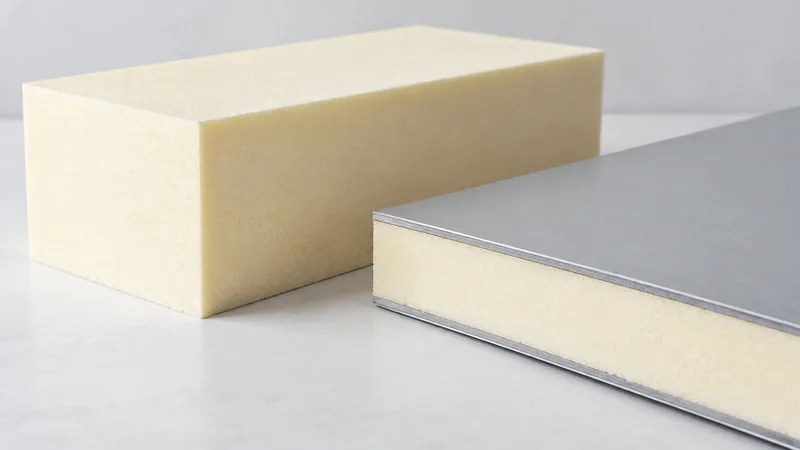
Attach an assembly section and identify the components that surround the foam. Mark facings, supports, local attachments and available depth. Name which dimensions are fixed and which may be revised. A photograph of a foam block can illustrate a reference material but cannot define a panel stack or an approved load-bearing construction.
Start with the Rigid PU Foam product hub and send the functional brief. Explain the specific question the next sample should answer. This gives a manufacturer a controlled basis for discussion while keeping unverified thermal values, dimensional stability and process capability marked [需确认].
Describe thickness, geometry and counterpart surfaces
Show nominal thickness and local sections rather than only the outside envelope. A stepped core, tapered edge or machined pocket can leave different material depths across the component. Identify those areas on the drawing and explain whether they control fit, insulation continuity, tool access or load transfer.
Define datums and the core orientation in the assembly. The surface that meets a facing or a support should be identifiable to machining and inspection. If a part is rotated or mirrored, show which features move with it. This helps quality compare a sample with the intended construction instead of judging a loose outline.
Record the facing materials and interface concept. A bonded panel, a mechanically retained insulation layer and a free-standing model have different counterpart requirements. Actual adhesive compatibility and interface strength need their own evidence. Do not infer an approved bonding system from the rigid foam family or a general customization statement.
Ask which dimensions and surfaces must be inspected before assembly. Some core features become hidden under facings, while others remain accessible at an edge. An inspection plan should distinguish direct dimensional measurement from an assembled observation. That distinction makes a sample approval useful when the project is later revised.
| Decision field | Input or record | Review purpose |
|---|---|---|
| Function | Insulation layer, model or structural core | Separate the evidence questions |
| Geometry | Thickness, datums and local features | Define what the sample represents |
| Thermal | Assembly conditions and required evidence | No conductivity value supplied |
| Compression | Load direction, method and specimen | Do not infer panel capacity |
| Process | Proposed format and inspection | Confirm capability by project |
Separate thermal questions from structural questions
For insulation, identify the intended thermal objective and the conditions under which it must be evaluated. Record the assembly, thickness, facing interfaces and relevant temperature questions with the responsible engineer. The knowledge base does not provide a validated thermal conductivity, thermal resistance or operating-temperature limit for a universal Rigid PU grade.
For loading, show the direction and location where compression enters the core. Identify whether the load is distributed through a facing or introduced through a local support or attachment. A compressive-strength value describes a specimen result under a method; it does not by itself describe the capacity of every assembled panel.
A component can have both functions, but its evidence fields should remain separate. A thermal result cannot substitute for a compression result, and a density record cannot establish either outcome. Ask the design owner which requirements apply and which test or calculation is needed for the actual construction.
The density and compressive-strength guide helps keep stress, method, specimen direction and conditioning visible. Use it to request grade data, then have the project engineer decide how that data supports the thermal or structural design question.
Where one core must address insulation and compression, prepare two requirement entries tied to the same section drawing. In the thermal entry, identify the surfaces and boundary conditions the engineer wants evaluated. In the structural entry, identify the support and load introduction being considered. State which question is unresolved in each entry and which document would answer it. This allows a grade proposal to be reviewed against both functions without allowing progress on one requirement to silently release the other.
Review the proposed grade and processing route
The client source retains 30–200 kg/m³ and compressive strength 0.2–5 MPa as [需确认]. These ranges are not a stocked-grade table or guaranteed limits. Request the proposed grade, specimen state, measurement methods and tolerances. Do not create intermediate grades or infer a thermal rating from those two fields.
Sheets, blocks, molded concepts and CNC-cut cores can be discussed as format routes. Select the route from the drawing, stock assumptions and inspection priorities. The knowledge base mentions mold-in-foam and CNC directions, while actual equipment ownership, feature limits, dimensions and tolerance capability remain project confirmations.
Use the sheets, blocks and CNC-cut core guide to define geometry inputs. A preferred machining route should not silently change thickness, datum surfaces or the interface that the design needs. Capture alternatives on their own proposed drawing revisions.
Consult ASTM International and the ISO standards catalogue with the technical owner for method terminology. These directories are references for discussing evidence; they do not certify Green Foams material or prove an in-house processing capability.
Prepare a representative core or panel sample
State the sample purpose before fabrication. A machining sample can investigate edge geometry and pockets; an assembly sample can investigate fit and facing interfaces; a material specimen can support a defined test. Each has a different scope. Identify the drawing, grade proposal and counterpart components associated with the trial.
Inspect dimensions and surfaces before the core is concealed. Record thickness at critical sections, datum relationships, edge condition and any feature that influences the interface. Keep measurement methods and deviations with the sample identity. A visual inspection should not be reported as a quantitative strength or thermal result.
Assemble the reviewed facings, supports or retention where needed for the project question. Observe fit, interface alignment and handling under the agreed sequence. If a process change is needed, identify what changed. A successful placement shows that configuration only, while load and thermal requirements still need their defined evidence.
Record evidence owners separately. Engineering may approve geometry and specify a test; quality may define inspection; the application owner may approve relevant conditions. Procurement should retain their scopes rather than combining a dimensional acceptance and an incomplete material report into a blanket performance approval.
Preserve the decision during quotation and revision
Use the cold-chain and construction core brief to carry the accepted inputs into quotation. Include component function, drawing, thickness, facing interfaces, grade questions, processing proposal and evidence owners. This describes what is being requested without making an unverified result a supply promise.
Compare proposal assumptions explicitly. An alternative grade, changed machining route or new facing interface may require another review. Ask the supplier to identify differences from the controlled request so that purchasing can compare the actual construction and scope rather than the material name alone.
Keep expected volume and revision timing as commercial inputs. Actual minimum order, stock position, capacity, tooling ownership and lead time require confirmation. They should not be invented to make a technical selection article more persuasive or borrowed from unrelated materials and applications.
Before handoff, record approved fields, pending evidence and the next action. Revisit affected checks when thickness, grade, facings, processing or temperature conditions change. A useful Rigid PU selection is a traceable proposal for one component and its evidence plan, rather than a general promise that density establishes performance.
Compare alternatives by the requirement they answer
An alternative proposal should state its purpose. A different thickness may be intended to address an assembly envelope, while another grade may require a new compression record. A facing change can introduce a different interface question. Record the changed variable and the expected evidence instead of describing every alternative as a better core.
When the project has several objectives, assign priorities with the engineering owner. A geometry trial can proceed while a thermal field remains pending, but that boundary must remain visible to purchasing. Keep a decision log showing what was accepted and what is still required before the next stage.
Use the same record when the component moves from an early model to an insulation or structural assembly. The material label can remain Rigid PU Foam while the load path, facings and acceptance conditions change. Reusing a sample identity does not extend evidence beyond the configuration that was actually reviewed.
- Define the component function and load or thermal question.
- Request the proposed grade and relevant methods.
- Review geometry, interfaces and processing scope.
- Preserve the sample identity, evidence and approval boundaries.