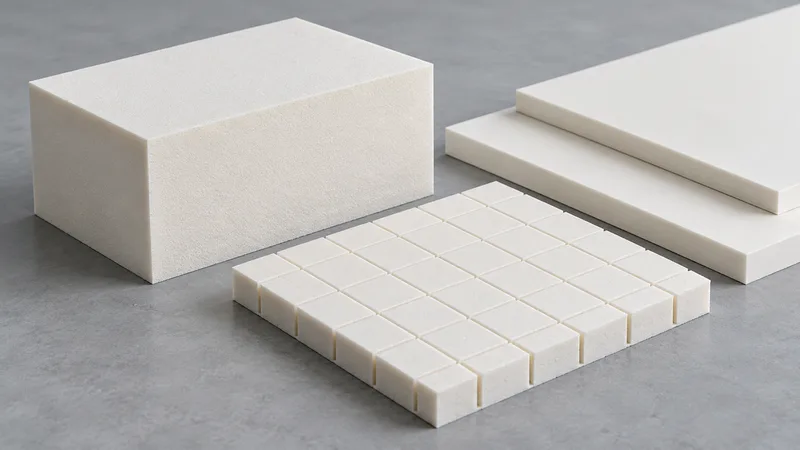
Reviewing PVC Foam sheets, blocks and machined cores begins with the part that must fit inside a sandwich assembly. The supply form is a route to that geometry, not a guarantee that every size or process is available. A useful request shows the core envelope, skins, edges and joining details before asking the supplier to recommend a form.
The PVC Foam material page describes hull, deck and sandwich-panel applications. Density and size customization is part of the customer discussion scope, with production details still pending confirmation. This guide compares format concepts for that scope. It does not claim a stocked block programme or a universal machining capability.
Define the delivered part and the work still required
State whether the request is for raw stock, a shaped core or a converted panel piece. Identify which features need to arrive finished and which will be created by the panel manufacturer. A supplier cannot compare those scopes reliably if every proposal is called a foam sheet while some include significant shaping work.
Provide the controlled drawing and any provisional dimensions. Show the external envelope, thickness and features that locate the core between the skins. Include curvature and local section changes where they belong to the design. The route should follow the drawing rather than a standard-looking shape copied from a reference image.
Name the assembly boundary. A single core piece may meet adjacent pieces or a different local construction. Mark these interfaces and their owner. The material supplier can then identify the proposed delivered part without taking unrequested responsibility for the rest of the hull, deck or panel design.
- Raw stock versus finished core scope.
- Drawing revision and provisional fields.
- Thickness, curvature and edge envelope.
- Openings, joints and adjacent parts.
- Operations performed by each party.
Review a sheet concept for flat or section-defined geometry
A sheet concept begins with a defined thickness and planar envelope. Ask whether the proposed core geometry can be represented by that form and which cutting steps remain. The project may need a simple outline or additional features. Show them explicitly so a quotation for raw sheet is not mistaken for a quotation for finished parts.
Record the skin interface and edge condition. A trimmed edge, step or local relief can affect how a core meets its neighbours or facings. The designer owns the required detail. Ask the supplier to confirm whether the route can provide it, and keep any tolerance or finish question attached to the relevant drawing feature.
Consider how the material is handled before assembly. The panel manufacturer may need orientation marks, piece identification or a defined packing arrangement for cut parts. These are logistics and process questions. They should not be turned into a material-performance claim or a promise of standard packaging without confirmation.
Do not assume sheet size or thickness availability from the planning density range. The current material information does not provide a complete stocked-size table. Ask for the proposed size and grade together. If the panel envelope needs joining or another form, preserve that as a design option rather than filling the missing stock detail with an invented dimension.
| Form concept | Useful review question | Scope to confirm |
|---|---|---|
| Sheet | Can the drawing be made from a flat core concept? | Thickness, dimensions, edges and cutting |
| Block | Which volume and shaping steps does the geometry need? | Block availability, machining and allowance |
| Machined core panel | Which controlled features must arrive finished? | Drawing, datum, tolerances and process responsibility |
| Joined core arrangement | How do pieces meet within the panel? | Joint geometry, identification and assembly owner |
Review a block concept through shaping responsibility
A block concept can be useful when the request describes a volume that needs further shaping. The brief should show the intended final geometry and ask which stock or conversion route is proposed. It should not assume block availability merely because the core is thick or because a machining example appears in a photograph.
Identify the shaping operations and their owner. Explain whether the supplier is asked to deliver the volume, create the shape or provide a partially converted part. A clear responsibility boundary helps procurement compare scope. It also prevents an unspecified machining operation from becoming an implied in-house capability.
Record the material and dimensional questions for the proposed block. Ask how the grade record, orientation and geometry relate to the converted part. The relevant method and specimen conditions belong to the material record; the drawing belongs to the finished shape. Keep these references separate rather than assigning a raw-stock value to every feature.
Where allowance or a datum is required, let the drawing owner define it. Do not insert a generic machining allowance or tolerance into the brief. Mark the field as a question and ask the converter for a route recommendation. The review can then distinguish design requirements from proposed processing assumptions.
Review machined panels with controlled features
A machined-core request needs the features that the delivered part must control. Show reference surfaces, local thickness changes, openings and edge geometry. Identify which dimensions are critical to the panel assembly. The proposed machining route should be assessed against that drawing, with actual capability confirmed for the material and grade.
Keep design intent readable alongside dimensional details. A drawing can include a feature without explaining its assembly role. A short note about skin contact, neighbouring core or attachment access can help the converter understand why the feature matters. It does not transfer the structural design decision to the supplier.
Ask how the part will be identified and reviewed after conversion. A shaped panel may need orientation information or a clear revision reference. Record the inspection method for critical geometry without inventing measurement thresholds. A sample should be compared to the controlled drawing rather than to a broad visual preference.
The PVC specification guide addresses the grade and method records behind the conversion discussion. Machining does not change a stress value into hardness or prove the full panel outcome. The material, converted part and assembled structure each have a different evidence scope.
Define joints and assembly sequence
If the panel uses multiple core pieces, show where they meet and how the assembly locates them. Record the joint geometry supplied by the designer. A route proposal may suggest another piece arrangement, but that suggestion needs review before it becomes a substitute for the controlled design.
Explain the order in which the pieces and skins are assembled. Access to a local feature may change once another piece is placed. A representative sample can help reveal such handling questions. Describe the observation and configuration without claiming a universal structural or bonding result from that exercise.
Keep joining-material and process questions explicit. The current PVC application scope does not specify a universal adhesive, skin system or manufacturing window. Ask the panel owner which conditions matter and which evidence is needed. A supplier's route recommendation should name its assumptions instead of relying on a generic sandwich-panel label.
- Identify pieces, interfaces and orientation.
- Record the intended assembly order.
- Assign the design and conversion owners.
- Review critical geometry in a representative setup.
- Return proposed changes to the drawing owner.
Confirm capability and inspection before comparing quotes
Request the actual material/grade and proposed format in each quotation. Ask which operations are included, which dimensions are controlled and which remain questions. A raw-sheet offer and a machined-core offer can be compared commercially only when the work scope is visible. Do not force them into an apparently equivalent price comparison.
For terminology, consult the ASTM International catalogue and the NIST measurement resources. They support method and measurement discussions, not a Green Foams qualification or test result. The relevant capability and inspection record must apply to the proposed converted part.
The PVC core project brief preserves drawing, sample and release ownership. Use it when a format has been proposed and the next step is a representative review. The original PVC core-selection guide is useful when a changed format alters the assembly task or design inputs.
Before release, record the approved drawing revision and format scope. Preserve unresolved grade, machining or assembly evidence. Expected volume belongs in the request, but universal MOQ, delivery and capacity values do not. The route decision should explain how the intended core is supplied and inspected without promising unsupported performance or production details.
Preserve orientation through conversion and delivery
Ask whether orientation or piece identity needs to stay visible after cutting or machining. A panel manufacturer may receive several similar pieces with different local features. A controlled identification scheme can help link each piece to its drawing and assembly location. The project owner should define that requirement instead of relying on a convenient production filename.
Also describe the intended receiving and handling review. An edge or feature that matters during panel assembly should be recognizable when the converted part is checked. Record the condition that the buyer wants inspected and the method used. Do not create a damage allowance or acceptance threshold without the relevant design and quality approval.
Keep packaging and delivery questions in the work scope while preserving their limits. Ask how the proposed core pieces are supplied and which operations remain for the panel manufacturer. An agreed drawing and clear identification can make that handoff reviewable. It does not establish transport protection, production capacity or delivery timing, which remain separate commercial and evidence questions.