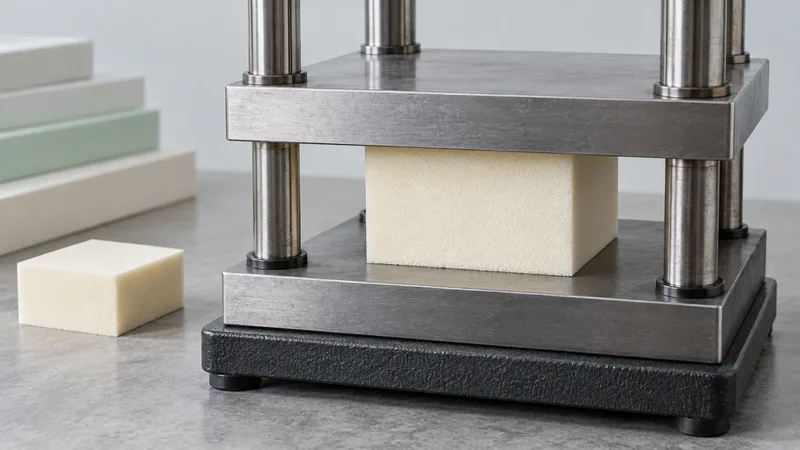
Reading PVC Foam density and compressive strength requires more than comparing numbers in a catalogue. Each record belongs to a grade, method and specimen. A hull, deck or sandwich panel adds skins, geometry and interfaces that the material record does not describe on its own. Preserve these levels before using the data in a design or purchasing decision.
The PVC Foam material route follows the supplied PVC material information. The provisional entries are 40–250 kg/m³ and compressive strength 0.3–4 MPa, both [需确认]. They are customer planning records, not verified production guarantees. This guide explains the questions needed to evaluate the proposed grade without manufacturing a grade table from the range.
Keep density as a separate field
Density describes mass relative to volume under the relevant measurement method. Ask which grade and specimen the value represents. Record the unit and applicable tolerance or variability where the supplier provides it. Do not assume that the family-level range means every value is an available, interchangeable grade.
A density value can help identify a material proposal, but it does not specify the complete structural design. Core thickness, skin construction, interfaces and project loading remain separate inputs. A purchasing description that names only density leaves these questions unanswered. It may appear precise while failing to define the part that needs review.
Ask the material owner how density is recorded and whether the technical data apply to the proposed supply form. If the record is missing, keep the field open. A representative sample can support an identified measurement question, but the method and scope need agreement. Do not substitute a visual impression for a density record.
- Material family and proposed grade.
- Density value with unit and method.
- Specimen or supply-form reference.
- Applicable tolerance or open question.
- Evidence date or technical-record identity.
Read compressive strength as stress, not softness
The material information records compressive strength in MPa. This is a stress value under an identified compression method and criterion. It is not Shore hardness, indentation softness or a statement about how a seal feels under a cover. Those quantities answer different questions and should not be used as replacements.
Ask what criterion the reported strength uses. The method and technical record should explain how the result is defined. Avoid inventing a criterion from the word strength. Different records can address different test conditions, and identical units do not guarantee identical meaning. Preserve the context before comparing values.
Specimen dimensions and direction matter to the interpretation of a material result. Ask how the sample was oriented and which direction the record addresses. If the project needs another direction or a converted geometry, identify that requirement separately. Do not assume that a single material figure describes every local feature in the finished panel.
A compressive-strength record also does not settle skin bonding, joints, local attachments or other panel requirements. The designer should identify the evidence needed for the full assembly. Keep the raw material property attached to its method instead of extending it into a broad marine or wind performance statement.
| Record | Meaning in the request | Context to preserve |
|---|---|---|
| Density | Mass-to-volume material field | Grade, method, specimen and tolerance |
| Compressive strength | Stress value in MPa under an identified method | Specimen geometry, direction, conditioning and criterion |
| Core geometry | Converted-part drawing fields | Thickness, edges, openings and revision |
| Panel requirement | Assembly design/evaluation question | Skins, interfaces, loads, method and owner |
Request specimen and conditioning details
Identify the specimen geometry behind the data. Ask for thickness, dimensions and orientation where those fields form part of the method. A number without this context can be difficult to relate to another record. The project needs an applicable comparison, not merely a larger or smaller figure.
Record conditioning and the stated test environment where relevant. The present material information does not supply a universal test setup for all PVC grades. Do not invent temperature, time or exposure conditions to make the table look complete. Ask the supplier to provide the actual record and let the project owner assess its relevance.
Preserve the record identity and date when available. A technical sheet, material test and project sample record have different scopes. A revised grade or supply form may need a new review. The purchasing team should be able to identify which record supports the proposed material instead of receiving an unreferenced specification line.
When context is absent, label the item as unresolved. That is more reliable than normalizing unmatched values into a fabricated comparison. A short question about method or specimen can prevent a larger misunderstanding later in the design. The goal is to clarify the evidence, not to force every proposal into one apparent scale.
Use a fair basis for comparing grades
Compare records that address the same property under a suitable method and specimen context. If the proposals use different methods, ask the engineer to decide whether and how they can be compared. Do not apply an unsupported conversion. Shared units are a starting point for questions, not proof of equivalence.
Keep density and compressive strength in separate columns. A provisional family range does not provide a density-to-strength mapping. Do not divide the range into invented grades or interpolate a value for a density that the supplier has not documented. Ask for the actual proposed grade and its material record.
Record changes to geometry and supply form alongside grade changes. A shaped or machined part adds drawing and processing context. The PVC format guide helps define that scope. The comparison should say whether it concerns raw material, converted cores or assembled panels before presenting a conclusion.
- Choose the property and design question.
- Identify the proposed grades and records.
- Check method, specimen and conditioning compatibility.
- Separate geometry/process differences from material differences.
- Preserve missing evidence and the next action.
Connect the data to the panel requirements
Start from the actual hull, deck or sandwich-panel drawing. Name the skins, core thickness, local features and project requirements. A material figure can inform the discussion, but the complete design needs its own criteria. The PVC structural-core selection guide organizes these inputs before grade selection.
Ask the designer which requirement each material field helps answer. Density may identify a proposal; compressive strength may relate to a stated material criterion. Another requirement may need a different property or an assembled evaluation. The supplier should not infer missing design criteria from the general application label.
Where a complete-panel result is needed, record the configuration and method. The skins, joining and local features must be identified. A raw foam test result cannot automatically prove the finished structure. Make the evidence boundary visible so a reviewer does not close an assembly requirement with an unrelated material number.
The current record does not establish universal fire, water, fatigue or lifetime performance. Those requirements should be written as evidence requests when applicable. Avoid adding them to the grade description based on the marine or wind application scope. An industry direction is not an approval certificate.
Use authority references without claiming compliance
The ASTM International catalogue can help locate relevant material-method terminology. The NIST measurement resources help clarify measurement context. They are reference sources, not reports for the proposed PVC grade or evidence that Green Foams has performed a particular test.
The project owner should select the applicable method and record requirements. A link to an institution cannot replace the specimen, procedure and result for the material being quoted. Do not present a method name as a certification. Ask which evidence is actually supplied and what further review the project requires.
Keep the technical-record language readable for procurement. Name the property, unit, grade, method and open fields. Purchasing should not need to guess whether a number belongs to raw stock or a finished core. Attach the controlled drawing and the proposed form when the record is used in a quotation discussion.
Close the record with an explicit evidence scope
A useful specification handoff explains what has been confirmed and what has not. State the proposed grade, record identity and applicable property context. Preserve unresolved specimen, method or tolerance questions. Do not allow a planning range to become a guaranteed purchase condition simply because it appears in a polished table.
The PVC core brief guide connects these fields to drawing and sample ownership. The designer can then define which material record, converted-part observation or panel evaluation is needed next. Approval belongs to that stated scope and configuration rather than to the foam family in general.
When a grade, drawing or process changes, review the evidence again. Retain the old record and identify which decision depended on it. This makes PVC Foam density and compressive-strength data useful for a traceable structural-core discussion while keeping unsupported performance, certification and production promises out of the specification.
Preserve revisions to technical data in the project record. If a supplier provides a newer sheet or changes the proposed grade, identify what changed and which decision used the earlier value. A revised number does not automatically change every drawing requirement. Ask the responsible engineer to determine which material or assembly questions need another review.
That discipline is particularly useful when purchasing receives several versions of a proposal. Keep one referenced record with each grade rather than combining favourable fields from unrelated documents. The comparison then represents the actual proposed material and its method context.