Begin with the contact and support functions
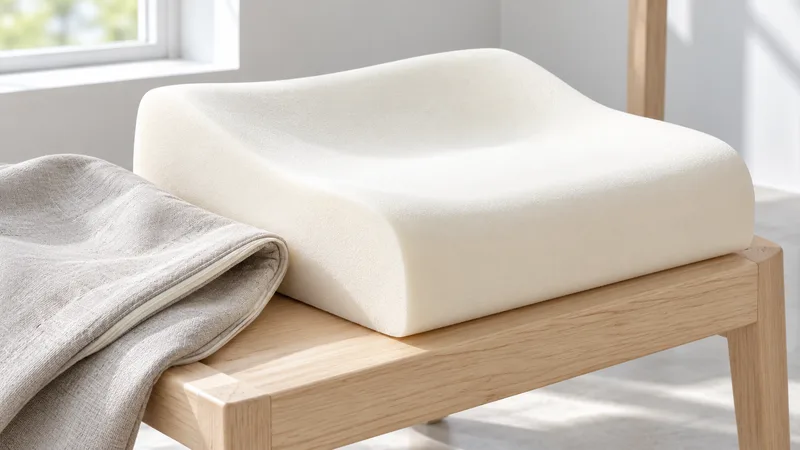
How to choose Memory Foam Cushions for seating is a construction question. The client knowledge base describes slow-response and composite-structure selection for office, automotive and home cushions. It does not supply a validated recovery time, operating-temperature range, ergonomic outcome or universal grade. Use those application directions to start a discussion rather than to promise a finished-seat result.
Identify which layer is intended to meet the user and what supports it underneath. A slow-response contact layer and a supporting layer can have separate functions, while a single-material proposal may involve another geometry. Draw the construction that is being reviewed instead of assuming every memory cushion uses the same layer stack.
Record the seat base and intended positions. A continuous pan, a contoured base and an interrupted support surface are different counterparts. Show the available depth and important clearances. A memory sample pressed on a workbench does not include these supports and cannot explain the response of the proposed seat by itself.
- Identify the sample and counterpart revisions.
- Separate observations from requirements still awaiting evidence.
- Assign the next review question to its responsible owner.
Start with the Memory Foam Cushions product hub and attach the assembly section. Mark which layers or counterparts are fixed and which may change during development. This gives a reviewer a useful boundary for suggesting a sample without inventing a support claim.
Describe the actual decision in observable language. The team might need to review cover fit, a transition near the front edge, movement against the base or the behavior of a contact region after use. Keep these observations separate from health, pressure-relief or comfort claims that the client evidence does not establish.
Map the local geometry and cover
Provide a plan view and sections through the sitting area, edge transitions and underside. Label the base-facing surface and identify the intended contact layer. Total thickness alone can hide a recess, a taper or a change in layer proportion. Those features belong in the drawing when they affect support, clearance or cover fitting.
Describe the cover construction, seams and attachment sequence. Record whether the sample is evaluated uncovered, covered or both. An uncovered piece can answer a shape question, while a covered seat is needed to discuss the interaction among the cushion, cover and support surface. Do not mix those observations in one unexplained approval.
If a composite is proposed, show layer order and thickness at each critical section. State whether the layers are retained mechanically, bonded or simply proposed for initial evaluation. Actual bonding method, compatibility, conversion scope and tolerances remain [需确认]. The word composite does not prove a particular production capability.
Identify installation direction and part orientation. A local contour may be easy to place incorrectly, especially if its counterpart features disappear after covering. Decide how assembly will recognize the correct version and how quality will check important underside dimensions before they become hidden.
Use the layered cushion brief when the stack is part of the project. It keeps layer roles, interfaces and acceptance owners visible. A clear construction drawing protects the material discussion from turning into an unsupported generic cushion recommendation.
| Decision field | Record input | Review purpose |
|---|---|---|
| Contact | User-facing layer and local thickness | Record what the layer is intended to do |
| Support | Underlying layers and seat base | Review the whole load path |
| Specification | Density and unresolved SH fields | Ask for grade and method |
| Conditions | Preparation, loading and temperature questions | Compare documented setups |
| Acceptance | Fit, observation and evidence owners | Approve the identified construction |
Read density and SH as unresolved source fields
The knowledge base records a recommended density of ≥50 kg/m³ as [需确认]. A recommendation in source material is not a confirmed minimum for every available grade. Request the proposed material identity, density method, specimen and tolerance before using a number as an approved drawing or purchasing requirement.
The same source retains SH16–30 and a different SH16–35 notation in its customization description. Keep that conflict visible. SH is not defined by the current record, so do not silently rename it Shore C, convert it to ILD or choose the wider range because it seems more useful for the project.
Ask the technical owner for the original TDS or measurement record that maps the notation to a grade. The scale, method, thickness and conditioning need clarification. Until that happens, a comparison based on an isolated SH number is an unresolved question rather than a validated firmness ranking.
The density and SH specification guide explains how to preserve the source fields. Keep specification reading connected to the construction drawing and sample identity. A density statement does not establish seating support, lifetime, slow-recovery speed or comfort.
Refer to ASTM International and the ISO standards catalogue with the project engineer for method terminology. These public directories do not validate the client ranges or certify a Green Foams cushion.
Set conditions for a useful slow-response comparison
Decide what the sample observation is intended to answer. A loose material observation, an uncovered stack review and a covered-seat evaluation are different setups. Record the sample identity, local thickness, counterpart components and loading or seated position. Without these details, the term slow-response can hide several unrelated questions.
Record conditioning and use-temperature questions with the technical owner. Ask where the sample is stored, how it is prepared and which conditions represent the intended use. The current knowledge base does not provide a verified thermal range. A sample observed in one room cannot establish suitability across every expected environment.
Keep the loading history and unloading observation traceable. State how the contact is applied, which region is observed and what constitutes the next comparison. Do not invent recovery seconds, repeated-cycle thresholds or pass criteria. The owner must define the method and any required evidence for the proposed grade and assembly.
Use the recovery and temperature review guide to build a controlled observation sheet. It helps distinguish what was seen from what was not tested. A recovery observation after one setup does not establish fatigue life or an installed support guarantee.
If comparison conditions differ, record them before discussing a preferred sample. A new cover, another support layer, a changed local thickness or different preparation can change the construction being evaluated. A useful log makes those differences visible rather than assigning every observation to the memory material alone.
Distinguish office, automotive and home decisions
An office-seat project may ask about adjustment clearance, cover presentation and the chosen sitting positions. A home cushion may have another base, removable cover or handling sequence. Record each project as its own assembly. Reuse the brief fields when useful, while keeping the actual conditions and approval scope separate.
An automotive request requires the program owner to define interfaces and applicable evidence. Neighboring components, installation space and compliance requirements belong in that review. Do not infer automotive safety, fire behavior or regulatory suitability from the memory name, density recommendation or an accepted home cushion.
When a buyer compares PU Foam Cushions as another route, define the question being compared. PU density/ILD and a memory slow-response proposal are separate technical records. Do not transfer a measured notation between them or claim one family is more comfortable without relevant evidence.
Ask who can approve fit, appearance, seated observations and required tests. These may be different owners. A buyer can preserve the agreed construction and open questions, but should not combine several informal comments into a blanket performance approval.
Record commercial inputs such as expected volume, packing and revision timing as requests. Actual grade availability, layered conversion, minimum order, capacity and lead time need confirmation. A useful selection path tells the reviewer what the seat needs while leaving unverified capability and performance fields visible.
Approve one construction and preserve its history
Prepare the final sample sheet with drawing, base, cover, layer order and proposed material identities. Identify the conditions and regions observed. Inspect assembly fit first, then conduct the seated or loading review agreed by the project owner. Record deviations with the component and revision involved.
Separate dimensional approval from response observations and formal evidence. A sample can show fit against a reviewed base without proving comfort or fatigue. A technical sheet can identify a grade without proving the layered seat. The acceptance record should state which decision each piece of evidence supports.
List the changes that require another review. A changed support layer, cover tension, local thickness, bonding route or material identity can alter the construction even when the outside outline remains the same. Retain the accepted sample and pending questions so that a later proposal is compared with the actual reviewed version.
Finish the handoff with a clear next action: revise a contour, clarify SH, obtain grade data or evaluate a controlled assembly. This makes the memory cushion decision traceable. It also prevents the broad phrase slow-response seating from becoming an unsupported promise about every use condition or every available cushion.
- Confirm the sample construction and drawing.
- Document conditions and observations.
- Review evidence gaps with the responsible owner.
- Preserve approval scope before a substitution or revision.