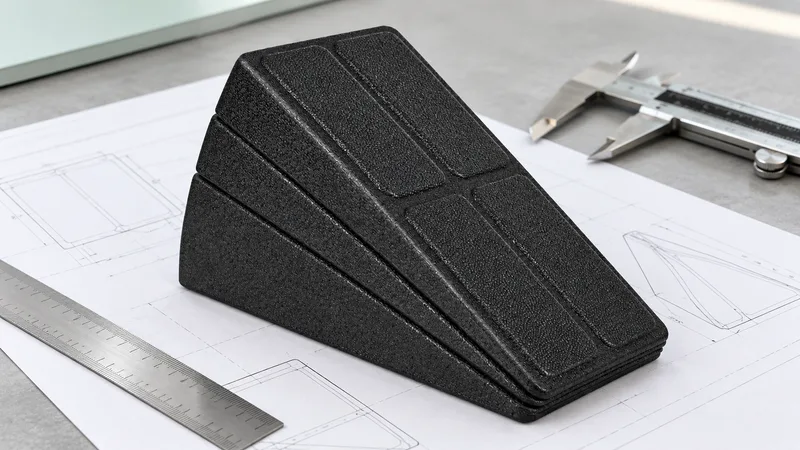
An EPP foam molded parts project brief helps the buyer and manufacturer discuss the same component. The source material identifies EPP foam for returnable containers, pallets and energy-absorbing protective parts, with automotive, packaging/logistics and sports-equipment applications. It also identifies in-mold forming and insert concepts as directions for project review. Their applicable manufacturing scope needs confirmation. A useful brief therefore describes the task and interfaces before asking for a finished part or a fixed commercial promise.
The EPP Foam material and project page provides the enquiry starting point. This guide explains how to prepare the information behind that enquiry. It does not assign a universal density, tolerance, service life or certification to the material family. When a requirement is undecided, label it clearly and explain why it matters. That gives the team a practical question to resolve rather than an assumption hidden in a drawing.
State the application and the component's task
Begin with the purpose of the part. Describe what it locates, protects, separates or interfaces with. If it is a packaging component, show the product and surrounding container. If it is an automotive or sports-equipment concept, explain the assembly and the component's position. An application label gives context, but the actual task defines the review. Avoid expecting the manufacturer to infer the requirement from a broad industry name.
Describe the handling sequence around the component. Explain how it is installed, how another part enters or leaves and which surfaces an operator touches. Identify any neighboring item that can obstruct access. Where the component moves through a returnable logistics loop, include unloading, empty return and storage. A part can fit an assembly while remaining difficult to handle. These issues are easier to identify when the brief describes the sequence.
Separate essential functions from preferences. A required clearance, locating interface or inspection surface belongs in the acceptance discussion. A desired appearance or preferred concept may still be open to revision. Mark that distinction in the brief. It helps the reviewer propose changes without accidentally altering a requirement that another team depends on. It also makes concept alternatives easier to compare on the same basis.
- Name the application and explain the component's task in the complete assembly.
- Show neighboring parts, contact areas, keep-out zones and handling access.
- Describe installation, use, removal, return and inspection where relevant.
- Separate mandatory acceptance requirements from provisional preferences.
List any special exposure or compliance requirement separately. Temperature, cleaning, chemical contact or other conditions need their own scope and evidence. The available project sources do not establish that EPP parts meet a particular automotive qualification or sports-product requirement. If an application has a governing specification, identify it and request the relevant records. Do not interpret the presence of an industry in the product description as proof of approval.
Provide geometry that explains the interfaces
A drawing should show the part envelope and its relationship to the assembly. Provide the current revision and identify which dimensions are provisional. Mark support areas, access openings and surfaces where contact is restricted. If another product sits inside a molded container or tray, include that product's drawing or a representative sample. Reviewing the outer shape alone can miss a critical internal interface.
Explain which dimensions control fit. A broad envelope dimension may communicate size without showing the contact that locates a product. A cavity depth may affect insertion, while an opening may affect removal. Ask the team to identify the dimensions that should be checked in a sample. Agreement on inspection points is more useful than placing a general tolerance statement on every feature without considering its task.
For a pallet, container or handling component, include interfaces with the surrounding system. Describe the intended stack arrangement, handling access and closure where applicable. These are proposed requirements for review, not claims that every EPP part can provide them. Show the actual neighboring geometry or explain the unresolved interface. A complete view lets the manufacturer discuss whether the proposed route matches the brief.
If the brief contains only photographs or a physical sample, explain what the sample represents. Identify the current product revision and any feature expected to change. Photographs can communicate orientation and appearance, but they do not define a controlled manufacturing dimension. Label measured or provisional information accordingly. The EPP foam molded parts discussion should result in a clearer geometry record rather than treating an informal reference as a release drawing.
| Brief area | Provide | Question to resolve |
|---|---|---|
| Application | Automotive, packaging/logistics or sports-equipment task | What must this component locate, protect or interface with? |
| Geometry | Drawing, sample, envelope, contact and keep-out surfaces | Which dimensions and interfaces control the assembly? |
| Material | Required properties and grade-specific evidence request | Which values need a confirmed method and acceptance limit? |
| Insert concept | Separate insert data and its intended position | What task does the insert perform and how is it evaluated? |
| Project scope | Expected volume, revisions and sampling objectives | Which decisions are ready and which remain provisional? |
Show the molding and insert concept without assuming feasibility
The source identifies in-mold forming and insert concepts for EPP project planning. Use that information to open a feasibility discussion. Show which features are intended to belong to the foam body and which are separate components. Explain the role of each proposed insert. It may provide an interface or another specific assembly function, but that role must be stated by the design team rather than inferred from a picture.
Supply separate insert information where it is available. Include its drawing, material requirement, intended position and orientation. Describe how the insert interacts with surrounding parts and what needs inspection after manufacture. Do not assume that every insert concept can be incorporated by the same route. The review must confirm the proposed material pairing, manufacturing approach and evidence appropriate to the interface.
Identify revision-sensitive features before discussing tooling. Explain whether the product, cavity or insert arrangement may change during development. Ask what an early sample can demonstrate and which decisions must wait for a more representative part. This keeps the team from approving a concept sample as if it proved the final manufacturing process. Tooling scope and change conditions belong in the project discussion rather than an assumed default promise.
For a general explanation of these forms, use the molded EPP parts, containers and trays guide. If material choice is still open for returnable packaging, the EPP vs EPE returnable-packaging comparison helps separate a molded component from a different protection route. Neither resource replaces a review of the specific insert and assembly.
- Identify the foam body, proposed insert and any separately assembled component.
- Provide insert geometry, material requirements, position and intended function.
- Flag features likely to change before production and explain the sample objective.
- Request confirmation of the applicable molding route, tooling scope and inspection method.
Define what material evidence and sampling must establish
An EPP foam molded parts brief should identify the property requirements that matter to the task. Request the proposed grade and supporting data rather than choosing a value from a general family description. The planning record contains differing EPP density ranges that have not been unified. This article does not publish one as a purchasing specification. Confirm the material data sheet, units and test method for the grade under review.
Keep reference information separate from acceptance limits. A data-sheet value may support material selection without becoming a guaranteed result for every geometry. The finished part also has its own configuration and manufacturing details. Agree which material and part checks the buyer needs, which are informative and which are release criteria. This distinction gives the sample review a useful purpose and prevents conflicting expectations later.
The ASTM International standards catalogue can help the team discuss relevant material or component test methods. For a packaged-product evaluation, the International Safe Transit Association is a reference point for transport-testing discussions. Select an applicable method for the actual task and conditions. These organizations are external references; their presence here does not establish Green Foams certification or a test result for an EPP part.
State the intended sample category. A concept sample may help communicate shape and access. A fit sample may support assembly checks under its stated construction. A production-representative sample may answer different questions about the agreed grade and process. Record the limitations rather than assuming that every sample proves every requirement. Where the review needs a particular construction, discuss it before the sample is prepared.
| Review stage | What it can address | What to record |
|---|---|---|
| Concept review | Application and geometry hypothesis | Unresolved feasibility, grade and tooling questions |
| Fit review | Product, enclosure and interface assembly | Sample construction and limitations |
| Insert review | Position, orientation and intended interface | Proposed retention and inspection criteria |
| Functional review | Agreed task and evaluation conditions | Method, configuration and acceptance decision |
| Production release | Approved drawing, grade and process scope | Inspection points, revision and outstanding evidence |
For an insert concept, give retention and positioning questions explicit attention. Check the assembled interface and explain the conditions under which it will operate. A visual inspection of the outside of the part may not resolve the insert's task. Agree an inspection or evaluation method that addresses the requirement. Keep the proposed configuration and result connected to the same drawing revision.
Finish with a clear approval and quotation scope
Before asking for a quotation, list the expected volume, development stage and delivery context. Explain whether the request concerns a concept review, sampling, tooling or a production part. Keep those scopes distinct so the response can address the actual work. The current source does not confirm EPP-specific minimum quantities, lead times, sample charges, tooling prices or production capacity. Request those terms for the reviewed project.
Assign responsibility for the remaining decisions. Engineering may need to confirm interfaces, purchasing may need to define quantity assumptions and another team may own compliance requirements. Name the decisions rather than inventing job titles or approval procedures. A brief becomes actionable when the team understands what is fixed, what is provisional and what evidence is needed before moving to the next stage.
After the sample review, preserve a controlled record. Include the approved drawing, proposed grade, insert information, inspection points and the scope of any evaluation. Note outstanding requirements beside the accepted ones. A later change to the product, cavity or loading process may affect the result. Review whether earlier evidence still applies instead of automatically carrying approval across revisions.
- Send the application, drawing or sample, neighboring geometry and expected volume.
- Review the grade, molding and insert concept, tooling assumptions and open requirements.
- Agree the sample scope, evaluation method and acceptance questions before sampling.
- Record the approved revision and unresolved evidence before discussing production release.
If the geometry is not yet defined, the EPP protective-packaging selection guide can help organize the initial questions. Once the brief is ready, use the EPP enquiry route to discuss the component. The useful outcome is a shared project record: a task, a proposed construction and an evidence plan that both sides can review. That record supports a realistic manufacturing conversation without turning an unconfirmed concept into a promise.