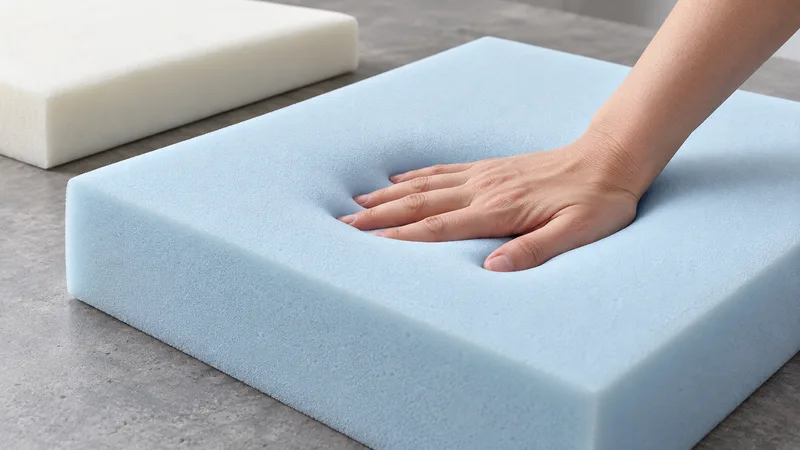
To review a seating foam sample, identify the cushion and the surrounding parts before asking whether it is acceptable. The base, cover, geometry and installation sequence define the assembled context. A loose piece can help a material discussion, but it cannot show every relationship in the seat. The review record should explain which decision the sample supports.
The furniture and seating hub introduces the application routes. A PU Foam Cushion request may include density/ILD and molded-form questions. A Memory Foam Cushion request may include response and composite-structure questions. This guide concerns the assembled sample and acceptance record after the initial route discussion.
Identify the cushion, base and cover
Start with the cushion drawing revision and the seat/base reference. Name the cover used for review and whether it is final or provisional. Record the proposed material family and grade, or preserve an open grade field if it is not yet supplied. The sample must be recognizable without depending on a photograph alone.
Mark known departures from the intended design. A prototype may use a substitute base, a temporary cover or a revised edge. These differences can be acceptable for a limited review, provided their scope is stated. A later designer should not assume that every observation was made on the final seat configuration.
Identify separate layers or inserts when present. Show the location and purpose of each proposed element rather than treating the cushion as a single unnamed assembly. Ask which joining and processing details are confirmed. The material information describes material and structure directions; it does not automatically establish every finished construction.
- Cushion part name and drawing revision.
- Seat/base and cover identity.
- Material family, grade and layer questions.
- Known prototype departures.
- Review owner and intended acceptance task.
Check the geometry against the actual seat
Locate the contact zones, attachment features and available thickness envelope. Place the sample on the identified base using the planned orientation. Observe how it follows the seat and whether nearby features remain clear. A geometry review should name locations on the drawing instead of ending with a broad statement that the shape looks right.
Show how the cushion is installed and removed. Access restrictions or locating features can change the operation. If the prototype uses extra support or a different attachment sequence, record that difference. The supplier and seat designer need to know whether the observed fit depends on an action that is absent from the intended assembly process.
Include the cover where it affects the configuration. Edge alignment, opening position and attachment details can alter placement. A sample checked without its cover may still answer a limited geometry question, but it should be identified as that limited setup. Do not apply the observation to the covered seat without review.
Photographs should identify the sample, orientation and feature under discussion. A close-up of an edge becomes more useful when it is tied to the drawing location and a short observation. The goal is to let another reviewer reconstruct the check, not merely to demonstrate that a cushion prototype exists.
| Sample field | Record | Boundary |
|---|---|---|
| Configuration | Cushion, base, cover and drawing | Prototype departures stay visible |
| Installation | Orientation, attachment and access | Loose material does not show seat fit |
| Specification | Grade, method and specimen context | Density/ILD alone does not approve the seat |
| Release | Accepted observations and open requirements | No universal comfort or life claim |
Preserve the material-method context
Ask for the grade and applicable technical record for the proposed route. PU density and ILD fields need their method and specimen context. Memory Foam response or composite-structure records need their own conditions. These fields should not be compressed into one firmness label that hides differences in thickness, measurement or construction.
The customer numerical ranges remain pending confirmation in the material information. Do not copy them into a finished-seat purchasing requirement as though they were guaranteed grades. Request the record that applies to the proposal and identify any unanswered field. A complete-looking specification is less useful than an honest record of what remains open.
Keep raw material evidence separate from converted-part and assembled-seat evidence. The cushion drawing adds geometry and conversion details. The cover and base add another level of context. The reviewer should know which level a method record addresses before using it to close a requirement.
The ASTM International catalogue provides material-method references, while the NIST measurement resources support measurement terminology. These authority links do not prove a sample result or a Green Foams certification. The project still needs the actual grade and applicable evidence record.
Define the observation condition before comparing samples
A comparison should state its setup before the reviewer records a preference. Identify the seat, cover, sample and conditions used. Keep thickness and structure differences visible. If several variables change together, describe them together rather than assigning the result to one material family. This makes the comparison useful to the next engineering decision.
Assembly observations can be stated plainly. Record placement access, edge alignment, cover fit or the need for a revised feature. If a project needs a response or load-related result, agree its method and conditions separately. Do not convert a subjective comment into an ergonomic or medical benefit without the relevant evidence.
Ask the designer which conditions require control for the project. A particular temperature context or installation method may matter to a response question. Record those conditions where applicable, without inventing a universal threshold. The sample review should follow the actual requirement rather than a generic test invented to fill the form.
- Identify the reviewed seat and sample.
- State the observation or measurement task.
- Record controlled conditions and departures.
- Describe the result with a location or method.
- Assign the open action and approval owner.
Keep comfort and compliance claims outside simple fit approval
A sample that fits a base can support a geometry decision. It does not prove comfort for every user, fatigue life, a fire result or regulatory approval. The current material information does not provide those outcomes. If the project requires them, state the requirement and ask for the applicable grade or assembled-system evidence.
Give each requirement an owner. A designer may accept an edge profile, a quality team may own measurement and a buyer may specify the evidence needed for a market. Keeping ownership visible prevents a fit approval from closing unrelated items. It also makes a partial review useful without overstating its scope.
Record mandatory conditions distinctly from exploratory comments. A team can discuss shape or structure while waiting for another evidence item. The handoff should show which decision is supported and which remains open. Avoid a broad approved label when only one part of the seating requirement has been evaluated.
Control revisions after the sample review
Identify the changes that need another check. Material grade, thickness, layer structure, geometry, cover or base can alter the reviewed configuration. The acceptance owner should decide which observations repeat after a change. Do not assume that a similar appearance means the same sample evidence still applies.
If a supplier proposes another material route, return to the PU and Memory Foam comparison guide. A different route can introduce new method and construction questions. Preserve the earlier record, identify the reason for the change and review the new configuration on its own terms.
Keep the revised drawing and sample identity linked to the outcome. A record of what changed can be brief, but it should be explicit. Procurement and upholstery teams need to know which version is being quoted and assembled. A price or material description alone cannot carry the full approval scope.
Hand over the bounded seating decision
The final record should name the accepted configuration, method context and open requirements. Include the drawing revision, proposed grade or grade question, cover/base identity and format. Expected volume can help describe the inquiry without creating a universal MOQ or delivery promise. Ask the supplier to flag any departure from the reviewed inputs.
The receiving or assembly team should be able to identify the approved form and orientation. Preserve the locations that caused a revision and the observations that justified acceptance. An informal workstation adjustment can be useful feedback, but it should return to the owner before it becomes a new purchasing or assembly assumption.
Reviewing a seating foam sample is therefore a controlled decision about one configuration. Its strength comes from clear geometry, method and ownership, not from a broad claim about a material family. Keep the base, cover and cushion record together so the next person can understand what was observed and what still requires evidence.
If the same cushion concept is proposed for another seat, first compare the bases, covers and installation details. A familiar material route does not establish equivalent geometry or acceptance conditions. Record the differences and ask the designer which observations can be reused. That avoids repeating every check blindly while also preventing an old result from migrating to an unreviewed assembly.
Retain useful sample feedback in the drawing handoff. A clearer edge reference or orientation note can help an operator reproduce the reviewed placement. Such practical changes improve the next sample discussion while preserving the distinction between assembly fit and unverified performance outcomes.