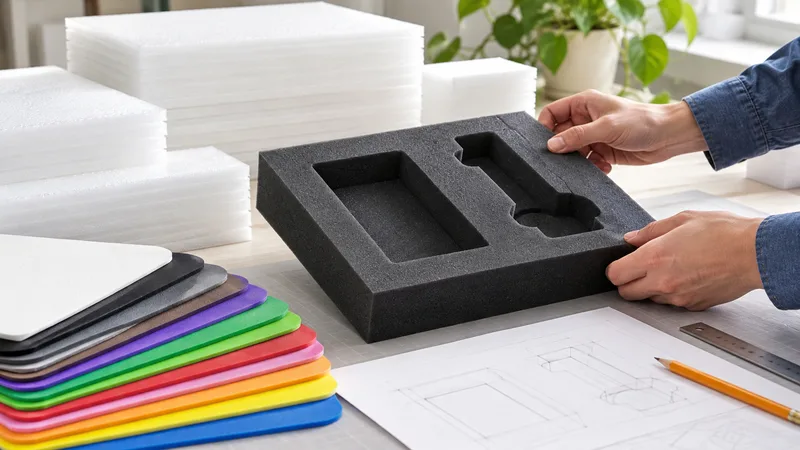
A custom foam project brief connects the component you need with the material and manufacturing questions a supplier must review. It should describe the application, drawing or sample, critical dimensions, expected volume and acceptance requirements. Green Foams's company materials describe formulation, mold development, sample preparation and OEM/ODM support. These are general cooperation capabilities. A brief is needed to establish how they might apply to your particular material and part, without assuming every listed process is available for every foam family.
Use the custom foam manufacturing capabilities page as the starting point for the conversation. This guide organizes the information behind that enquiry. It does not prescribe a universal material grade or promise tooling cost, delivery time or production capacity. If you do not have a final drawing, send the current concept with the unresolved decisions clearly marked. A useful brief makes uncertainty visible so it can be reviewed, rather than hiding it behind an apparently complete specification.
Explain what the component must do
Start with the function of the component in its complete assembly. A foam part may locate a product, cushion a contact point, fill a sealing gap, support a seated user or contribute to an insulation construction. These tasks ask different questions. Show the surrounding parts and explain how the foam is installed and used. A broad application label gives context, but the actual contact surfaces, loads and exposure conditions define what must be reviewed before selecting a material route.
Separate mandatory requirements from preferences. A controlled clearance, a surface that must remain unobstructed or an inspection requirement may be essential to the assembly. A preferred color or proposed outline might still be open to discussion. Mark the difference in the brief. This allows a supplier to suggest changes without accidentally changing a requirement another team depends on. It also helps purchasing compare responses that address the same task rather than compare quotations built on different assumptions.
Describe installation and handling. Explain whether the foam is placed by hand, retained by surrounding geometry or attached using another component. Identify the surfaces that an operator can touch and any areas that must remain clean or accessible. If there are repeated assembly or transport operations, describe the sequence rather than assigning an unsupported service life. These details help reveal constraints that may not be visible in a drawing of the foam alone.
- State the task and show the surrounding assembly.
- Identify critical contacts, clearances and keep-out areas.
- Describe installation, handling and removal where relevant.
- Separate fixed acceptance requirements from provisional preferences.
Make the drawing and sample tell the same story
A custom foam project brief should identify the drawing revision, units and dimensions that control fit. Show the outline, thickness, cavity and interfaces as applicable. Identify which dimensions are critical and explain their function. Avoid giving every dimension the same priority if the assembly depends on only a few interfaces. Where tolerances are undecided, state that they need review. Do not invent a tolerance simply to fill a blank field or copy one from an unrelated material.
A reference sample can support the conversation, but describe what it represents. It may show an outline, a surface, a fit concept or a material preference. It may also come from a different production route. Label those limits. A sample should not silently replace a controlled drawing or imply that the supplier can reproduce its material and performance. If the drawing and sample disagree, flag the disagreement explicitly and identify which reference should govern the next decision.
Explain neighboring geometry instead of expecting the reviewer to infer it. Packaging parts need the protected product and container relationship; sealing parts need the gap and compression direction; cushions need the support and cover arrangement. For example, the EPE Foam material discussion begins with packaging geometry, while an EPDM Foam sealing review needs contact and exposure conditions. The information changes with the task even when both projects use a drawing and sample.
| Brief field | Useful reference | Question to resolve |
|---|---|---|
| Function | Application and assembly | What must the foam do? |
| Geometry | Drawing, sample and revision | Which interfaces control fit? |
| Material | Grade reference or requirements | Which properties need evidence? |
| Process | Proposed construction | What manufacturing scope needs confirmation? |
| Project | Volume and sample purpose | Which decisions are ready? |
Describe requirements before choosing a final grade
A material name is a starting point rather than a complete specification. Explain why a foam family is being considered and which conditions it needs to meet. If your organization already controls a grade or technical data sheet, include that reference and its revision. If selection is still open, describe the function and request a material review. This keeps the conversation focused on the requirement instead of turning an unconfirmed density, hardness or strength value into an assumed purchasing specification.
List temperature, contact media, cleaning, environmental exposure or regulatory conditions only where they are relevant. Explain the actual configuration and any required method or acceptance limit. A general material description does not establish compatibility with every chemical or approval for every industry. Ask which grade and evidence apply to your conditions. If there is no available record, identify the gap and discuss an evaluation plan. An unanswered question is more useful than an unsupported assurance.
Keep externally defined requirements separate from the supplier's data. The ISO standards directory and ASTM International standards organization are starting points for identifying a relevant method or document. Their mention does not establish certification or compliance for Green Foams. Confirm the method, version, specimen and acceptance criteria for your project, and request evidence that identifies the proposed material or component.
- Provide the controlled material reference if one already exists.
- Describe exposure and functional requirements when selection is open.
- Name the method and acceptance criteria required by your project.
- Ask for grade-specific evidence and mark any remaining gap.
Review process and tooling scope together
A custom foam project brief should show the construction you expect without assuming the manufacturing route. Cutting, lamination, molding or an insert concept may be relevant, depending on material and geometry. The company materials identify general development and manufacturing support, but specific processes need confirmation by foam family. Ask the reviewer to explain the proposed route and its limitations. Include whether the work is performed internally or with external support when that distinction matters to your supplier review.
If tooling is part of the discussion, separate tooling requirements from part requirements. Identify the geometry controlled by the tool and the decisions still open in the component design. Ask which sample stage is appropriate before production tooling is finalized. Do not infer mold dimensions, ownership conditions or tooling fees from a photograph or a general capability statement. These items belong in the reviewed project scope and commercial agreement, alongside change responsibility and the reference drawing.
Provide assembly and attachment requirements where the foam interfaces with another material. Show the neighboring part and the purpose of the joint. If an adhesive, insert or cover is controlled by your organization, identify it and explain any restrictions. If the choice is open, request review rather than naming an unsupported construction. A route can only be assessed meaningfully when the part, interfaces and relevant acceptance conditions are described together.
Set a useful sample objective
Agree what the next sample is intended to demonstrate. It may support geometry, assembly, a material decision or a production review. These objectives are related but different. A concept sample can clarify an interface without representing the final material or production process. State the limits before the sample is evaluated. This prevents a successful fit check from being treated as proof of an untested environmental, mechanical or regulatory requirement.
Define the questions and checks before requesting the sample. Explain the assembly used for fit, the dimensions to inspect and any evaluation that needs an agreed method. Record who will make the acceptance decision and how unresolved issues will be returned for review. The foam production sample approval guide explains that handoff in more detail. A clear objective makes sampling informative and helps the parties decide whether another review or evidence request is needed.
State expected volume, project variants and the maturity of the design. These inputs affect the manufacturing and commercial discussion, but they do not establish a universal minimum quantity or lead time. Request project-specific terms after the route has been reviewed. Identify whether the request covers development, a sample, tooling or production parts. Keeping these scopes separate helps each response address the actual work rather than a mixture of assumptions.
- Send the application, controlled references and unresolved questions.
- Review the proposed material, construction and manufacturing scope.
- Agree the sample purpose, checks and evidence requirements.
- Record the accepted revision and remaining work before production release.
Keep a controlled record as the project changes
Preserve the custom foam project brief alongside its drawing, material reference and review decisions. When the geometry, material or intended use changes, identify the change clearly. Ask whether earlier sample results still apply. A previous approval should not automatically carry across a different construction or exposure condition. Revision control makes the relationship between a sample and a production requirement visible, which is essential when several teams or component variants are involved.
Close the review with an actionable record: the proposed part, the route under consideration, accepted inputs and outstanding questions. Assign ownership for the remaining decisions instead of assuming the supplier can decide every requirement. Engineering, purchasing and compliance needs may have different owners in your organization. A practical brief connects those questions so the next conversation can resolve them with evidence, without presenting an unconfirmed concept as a production commitment.