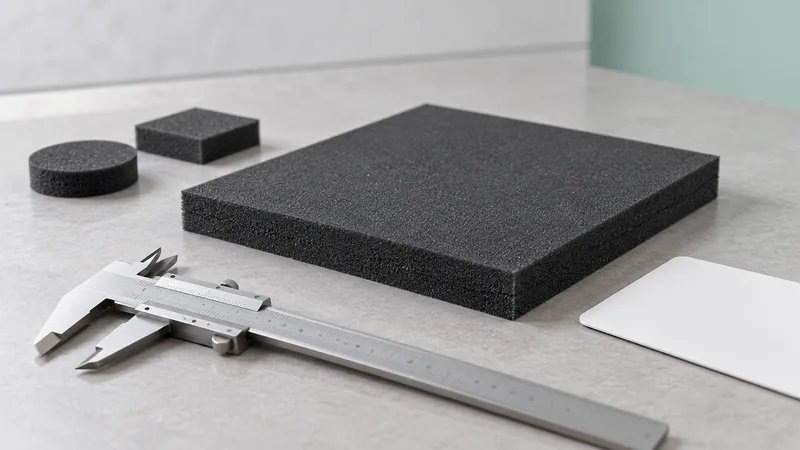
Foam sample approval is the decision that connects a physical sample to an agreed requirement. It should identify the sample, material, construction, drawing revision and checks the sample can support. The useful outcome is an approval record with clear limits, rather than a simple message that the part looks acceptable. Green Foams's company materials describe sample preparation, quality control and OEM/ODM support. They do not establish a universal inspection plan or guarantee every test capability for every material and component.
Begin with the manufacturing project discussion and a defined sample objective. This guide explains how to structure the buyer's review and what to return for confirmation. It does not replace the agreed project specification or assign a test result to an untested material. A sample can answer a specific question while leaving other requirements unresolved. Naming those limits is part of a useful approval, especially when the design or manufacturing route is still developing.
Identify the sample before evaluating it
Foam sample approval begins with traceability. Record the sample reference, associated drawing revision and proposed material. Describe how the sample was made and whether its construction represents the intended production route. If some information is missing, request it before treating a result as production evidence. The relationship between the sample and the project specification matters more than the appearance of a single item. A sample without a controlled reference can be difficult to interpret when the project changes.
Separate concept, fit and production-representative samples. A concept may help assess the outline or handling sequence. A fit sample may clarify interfaces with neighboring parts. A production-representative sample needs a defined relationship to the proposed material and process. These descriptions should reflect the actual scope agreed by the parties. Do not assume that a successful assembly check establishes the performance of a different material, construction or manufacturing route.
Inspect the sample record for discrepancies before beginning the evaluation. Check whether a revised cavity, thickness or attachment method has been introduced. Compare the record with the controlled drawing and note any deviation. A sample can still provide useful information if it differs from the drawing, but the difference must be visible. Otherwise the team may approve the physical sample while expecting production to follow a specification the sample never represented.
- Identify the sample and the drawing revision it represents.
- Record the material and construction under review.
- State whether the sample is concept, fit or production-representative.
- Flag deviations and missing information before testing.
Review fit in the intended assembly
Place the sample in the assembly or fixture relevant to its task. Show how it contacts neighboring parts and whether the expected clearance, location or compression can be achieved. Follow the intended installation and removal sequence. A sample that fits once may still be difficult to load, align or handle during the actual workflow. Record these observations as specific interface questions rather than relying on a general judgement that the component feels right.
For packaging, evaluate the protected product, insert and surrounding container together. Explain contact points and any areas that need clearance. The EPE Foam packaging discussion provides the material context, but the approval belongs to the actual assembly. For sealing, review the gap, mating surfaces and intended compression direction with the proposed part. The EPDM Foam project review similarly requires application conditions rather than approval based only on an unattached sample.
Distinguish a geometric observation from a functional claim. You may observe that a sample contacts a surface or locates a product, but that does not establish leak performance, impact protection or long-term behavior. If these outcomes are required, define an appropriate evaluation with its conditions and acceptance criteria. Report what was observed and identify what still needs evidence. This makes the fit review useful without overstating what the sample has demonstrated.
| Review scope | Useful record | Limit to retain |
|---|---|---|
| Concept | Outline and handling observations | Material or process may remain provisional |
| Fit | Assembly and interfaces | Not proof of untested functional performance |
| Dimensions | Agreed measurement method | Limits must be explicitly established |
| Function | Conditions and acceptance criteria | Result applies to the tested scope |
| Release | Controlled material and drawing | Commercial terms remain separately agreed |
Connect dimensions to inspection conditions
Foam sample approval should identify dimensions that matter to the assembly and how they were checked. Record the location and method of the measurement, together with any conditions that affect interpretation. Foam can be handled or compressed during inspection, so a dimension needs a defined measurement approach. Agree the method rather than assuming different reviewers will obtain equivalent results from different techniques. The relevant record connects the measurement to the drawing requirement and the sample being evaluated.
Use agreed tolerances and acceptance limits. If the project has not established them, treat the measurement as information for review rather than a pass or fail decision. Do not invent a tolerance based on another material, a photograph or an example table. Ask which dimensions the proposed manufacturing route can control and what evidence supports that discussion. The result should help the parties reach an explicit requirement, not conceal uncertainty behind a numeric inspection result.
Keep material checks separate from dimensional checks. A thickness observation does not verify density, hardness, compression behavior or strength. Request the appropriate grade-specific data and method where a material requirement is important. A controlled technical data sheet can support selection, while project-specific testing may be needed for the finished construction. Name the document and the decision it supports. Avoid treating an unverified range in preliminary materials as a final production guarantee.
Agree functional and compliance evidence
Identify each outcome that foam sample approval must address and the evidence needed for it. A functional evaluation may involve the complete component, assembly or packaging configuration. A material requirement may use a specimen and method with different scope. The two should not be confused. Describe the conditions, acceptance criteria and applicable reference before reviewing a result. If the method is not yet defined, record that as outstanding work rather than accepting a broad performance statement.
The ISO standards directory and ASTM International provide starting points for discussing relevant standards and methods. They are not evidence that Green Foams or the proposed foam is certified. Confirm the applicable document and version with your requirements owner. The evidence request should identify the grade, specimen or part and the conditions covered by the result, so the scope can be compared with the project.
Check certification and report applicability separately. A document may cover a legal entity, a material grade, a specific product or a particular activity. Ask whether it applies to the proposed supply route and whether it remains current. Do not generalize a report for another product into a claim about all foam materials. If a requirement is essential and the evidence is unavailable, retain it as an open condition before production release.
- Name the requirement and the evidence needed to establish it.
- Record the method, configuration and acceptance criteria.
- Match reports to the proposed grade, part and relevant conditions.
- Keep missing or inapplicable evidence visible in the approval record.
Return a decision the manufacturer can act on
Communicate the outcome of the sample review in a structured record. Identify what is accepted, what needs a change and what remains untested. Include the drawing revision and sample reference. Specific comments about a cavity, contact surface or inspection point are more actionable than a general request to improve the part. Where several issues interact, explain their priority so a proposed correction does not solve one problem while altering a requirement that already passed review.
Show the requested change in the controlled references. A photograph can clarify an observation, but the production drawing should carry the agreed geometry. Ask whether the change affects the material, tooling or construction. Determine which earlier checks need to be repeated rather than assuming all sample evidence transfers to the revision. The custom foam project brief guide helps keep these requirements connected to the original task and interfaces.
State who owns the remaining decisions. If another team controls compliance, an interface or a material standard, identify the requirement that needs its review. The supplier should not be expected to infer an organization's internal acceptance authority. A useful response gives the manufacturer a route to the next decision: correct a drawing, review a grade, produce a revised sample or provide a document. It does not hide incomplete evidence inside a general approval message.
- Record the inspected sample and controlled references.
- Separate accepted checks from changes and untested requirements.
- Return specific observations with their effect on the component's task.
- Confirm what must be reviewed again after the revision.
Separate sample acceptance from production release
Foam sample approval may support production release, but it is not automatically the same decision. Confirm the approved material, drawing, manufacturing scope and inspection requirements for the supply being discussed. Record unresolved evidence and commercial questions separately. The company source materials do not establish universal minimum quantities, sample charges, tooling terms, capacity or lead times. These are project-specific items to request once the route and acceptance requirements have been reviewed.
Preserve the approval record for later changes and repeat orders. If the component, environment or construction changes, review whether the previous sample still represents the new scope. A clear record helps buyers and manufacturers discuss the same part and avoids relying on memory about an earlier sample. The practical goal is a traceable decision: what was reviewed, what was accepted, what evidence applies and what remains to be resolved before supply proceeds.