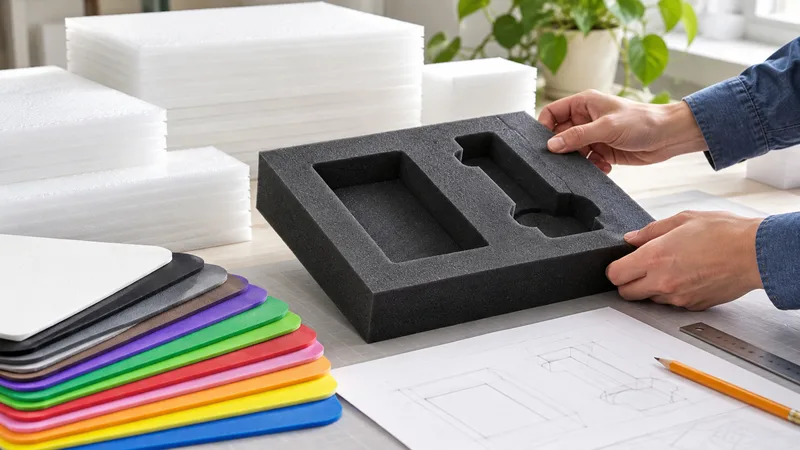
A custom foam project brief connects the component you need with the material and manufacturing questions a supplier must review. It should describe the application, drawing or sample, critical dimensions, expected volume and acceptance requirements. Green Foams's company materials describe formulation, mold development, sample preparation and OEM/ODM support. These are general cooperation capabilities. A brief is needed to establish how they might apply to your particular material and part, without assuming every listed process is available for every foam family.
Use the custom foam manufacturing capabilities page as the starting point for the conversation. This guide organizes the information behind that enquiry. It does not prescribe a universal material grade or promise tooling cost, delivery time or production capacity. If you do not have a final drawing, send the current concept with the unresolved decisions clearly marked. A useful brief makes uncertainty visible so it can be reviewed, rather than hiding it behind an apparently complete specification.
Explain what the component must do
Start with the function of the component in its complete assembly. A foam part may locate a product, cushion a contact point, fill a sealing gap, support a seated user or contribute to an insulation construction. These tasks ask different questions. Show the surrounding parts and explain how the foam is installed and used. A broad application label gives context, but the actual contact surfaces, loads and exposure conditions define what must be reviewed before selecting a material route.
Separate mandatory requirements from preferences. A controlled clearance, a surface that must remain unobstructed or an inspection requirement may be essential to the assembly. A preferred color or proposed outline might still be open to discussion. Mark the difference in the brief. This allows a supplier to suggest changes without accidentally changing a requirement another team depends on. It also helps purchasing compare responses that address the same task rather than compare quotations built on different assumptions.
Describe installation and handling. Explain whether the foam is placed by hand, retained by surrounding geometry or attached using another component. Identify the surfaces that an operator can touch and any areas that must remain clean or accessible. If there are repeated assembly or transport operations, describe the sequence rather than assigning an unsupported service life. These details help reveal constraints that may not be visible in a drawing of the foam alone.
- Define the actual contact, support or sealing task in its assembly.
- Mark the fixed interface and keep-out boundaries separately from preferences.
- Describe installation and removal only where they constrain the supplied part.
Make the drawing and sample tell the same story
A custom foam project brief should identify the drawing revision, units and dimensions that control fit. Show the outline, thickness, cavity and interfaces as applicable. Identify which dimensions are critical and explain their function. Avoid giving every dimension the same priority if the assembly depends on only a few interfaces. Where tolerances are undecided, state that they need review. Do not invent a tolerance simply to fill a blank field or copy one from an unrelated material.
A reference sample can support the conversation, but describe what it represents. It may show an outline, a surface, a fit concept or a material preference. It may also come from a different production route. Label those limits. A sample should not silently replace a controlled drawing or imply that the supplier can reproduce its material and performance. If the drawing and sample disagree, flag the disagreement explicitly and identify which reference should govern the next decision.
Explain neighboring geometry instead of expecting the reviewer to infer it. Packaging parts need the protected product and container relationship; sealing parts need the gap and compression direction; cushions need the support and cover arrangement. For example, the EPE Foam material discussion begins with packaging geometry, while an EPDM Foam sealing review needs contact and exposure conditions. The information changes with the task even when both projects use a drawing and sample.
| Brief field | Useful reference | Question to resolve |
|---|---|---|
| Function | Application and assembly | What must the foam do? |
| Geometry | Drawing, sample and revision | Which interfaces control fit? |
| Material | Grade reference or requirements | Which properties need evidence? |
| Process | Proposed construction | What manufacturing scope needs confirmation? |
| Project | Volume and sample purpose | Which decisions are ready? |
Describe requirements before choosing a final grade
A material name is a starting point rather than a complete specification. Explain why a foam family is being considered and which conditions it needs to meet. If your organization already controls a grade or technical data sheet, include that reference and its revision. If selection is still open, describe the function and request a material review. This keeps the conversation focused on the requirement instead of turning an unconfirmed density, hardness or strength value into an assumed purchasing specification.
Identify exposure and assembly requirements with the relevant counterparts. Confirm the proposed process by material family, including internal/external work where needed. Separate tooling scope from part requirements, and identify controlled adhesives, inserts or covers without assuming their supply.
Keep externally defined requirements separate from the supplier's data. The ISO standards directory and ASTM International standards organization are starting points for identifying a relevant method or document. Their mention does not establish certification or compliance for Green Foams. Confirm the method, version, specimen and acceptance criteria for your project, and request evidence that identifies the proposed material or component.
- Provide the controlled material reference if one already exists.
- Describe exposure and functional requirements when selection is open.
- Name the method and acceptance criteria required by your project.
- Ask for grade-specific evidence and mark any remaining gap.
Send a minimum usable RFQ package
Blank project packet: this is a copyable request structure, not a completed customer brief. Attach the current drawing or sketch and identify unresolved inputs. Do not invent a grade, tolerance or commercial term to make every field look complete.
| Packet item | Buyer entry | Requested supplier response |
|---|---|---|
| Function and boundaries | [part, assembly, job, allowed contacts and keep-outs] | [proposed material/form and reason for route] |
| Controlled geometry | [drawing/sketch, units, revision, datums and critical sections] | [capability questions, exceptions and required missing detail] |
| Fixed versus exploratory | [fixed interfaces/criteria; preferred or open features] | [alternative affects fixed requirement? identify before quotation] |
| Reference sample | [identity and purpose: outline / surface / fit / material preference] | [what can be represented; what cannot yet be matched] |
| Material evidence | [controlled grade or requirement, conditions and method] | [applicable TDS/report or evidence gap] |
| Development deliverables | [design input, tooling, converted part, interfaces and documentation] | [included work, internal/external scope and responsibility] |
| Next sample question | [specific feature or requirement, fixture and decision needed] | [sample construction/route, limits and proposed review] |
| Commercial enquiry | [quantity status, variants and requested deliverable] | [project-specific tooling/supply/delivery terms and exclusions] |
Categorical handoff example: a reference sample with unknown material can remain valid for an outline discussion. Mark material selection open and ask for an identified proposal; do not describe it as an exact material match. A sketch with an undecided interface can similarly support design review without being released for tooling.
- Design: [who controls the final drawing and approves an interface change].
- Tooling: [scope, ownership and change terms to confirm separately].
- Samples: [what is supplied, which counterparts are needed and which question it answers].
The foam production sample approval guide provides the disposition record for that next step. If the brief changes, attach the changed requirement and affected sample question rather than repeating the entire enquiry history.